Adrenal Gland vs Pituitary Gland: Understanding Key Differences
Adrenal Gland vs Pituitary Gland: Understanding the Essential Differences
The human endocrine system relies on several crucial adrenal gland and pituitary gland structures to maintain hormonal balance throughout the body. These two glands, though distinct in their location and function, work together to regulate numerous bodily processes. While both are endocrine glands responsible for hormone production, their specific roles, structures, and relationships within the hormonal hierarchy differ significantly.
For many people, understanding the endocrine system can feel like navigating a complex web of hormones and glands. However, when you focus on the fundamental differences between pituitary gland functions and adrenal gland characteristics, the picture becomes clearer. These glands represent two distinct levels of endocrine control in our bodies.
What is the Adrenal Gland?
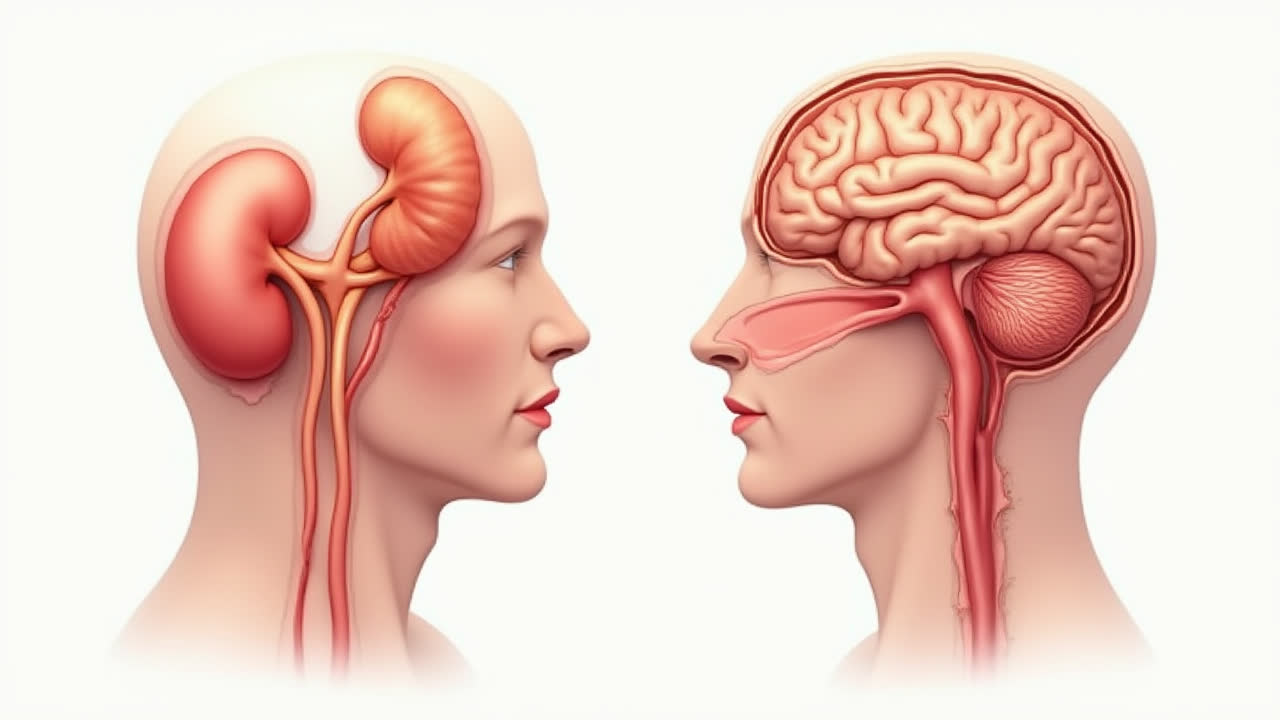
The adrenal gland is a small, triangular-shaped organ that sits gracefully atop each kidney like a tiny hat. Most people have two adrenal glands - one for each kidney - which makes them unique among many of our endocrine glands. These remarkable structures measure about 1.5 inches in height and 3 inches in length. Fun fact: they're sometimes called suprarenal glands, which basically means "above the kidney" in fancy medical terminology.
Each adrenal gland consists of two distinct parts that function almost like separate glands:
- Adrenal cortex: The firm outer layer that produces glucocorticoids and mineralocorticoids
- Adrenal medulla: The soft inner core that secretes catecholamines like adrenaline
Think of the adrenal gland as your body's stress response headquarters. When life throws you a curveball - whether it's a near-miss accident or an important presentation - these glands kick into action, releasing hormones that help you handle the situation.
Understanding the Pituitary Gland
The pituitary gland, often called the "master gland," is a pea-sized powerhouse located at the base of your brain. It's attached to the hypothalamus by a tiny bridge of nerve tissue called the infundibulum. Despite its small size, this mighty gland controls the activity of other endocrine glands throughout your body.
Unlike the adrenal glands, you only have one pituitary gland, and it's divided into two functional parts:
- Anterior pituitary: Produces and secretes its own hormones
- Posterior pituitary: Stores and releases hormones made by the hypothalamus
Here's something interesting: while the adrenal gland responds to direct nerve stimulation during stress, the pituitary operates through a more sophisticated hormonal messaging system with the hypothalamus.
Primary vs Secondary Endocrine Glands
One of the most significant differences between these glands involves their place in the endocrine hierarchy. The pituitary gland serves as a primary endocrine gland, meaning it produces hormones that control other endocrine glands. Meanwhile, the adrenal gland functions as a secondary endocrine gland, responding to signals from the pituitary.
This relationship means that hormones from the anterior pituitary - particularly ACTH (adrenocorticotropic hormone) - directly influence the adrenal cortex. It's like having a boss-employee relationship in the corporate world of hormones! The pituitary gives orders, and the adrenal gland carries them out.
But wait, there's more to this story. While the adrenal cortex responds to pituitary signals, the adrenal medulla receives direct nervous stimulation during fight-or-flight situations. This dual control system makes the adrenal gland uniquely versatile in its responses.
Hormones: The Messengers of the Body
Both glands produce distinct sets of hormones with different functions. The adrenal gland hormones include:
- Cortisol: Your stress hormone that helps regulate blood sugar and metabolism
- Aldosterone: Controls blood pressure and electrolyte balance
- Adrenaline (epinephrine): The famous fight-or-flight hormone
- Noradrenaline: Helps regulate blood pressure
The pituitary gland produces numerous hormones including growth hormone, thyroid-stimulating hormone, and luteinizing hormone. These hormones essentially act as the body's control center, telling other glands when to produce their own hormones. It's a fascinating system of checks and balances!
A personal observation: watching patients with hormone imbalances taught me how crucial these tiny glands are to our daily functions. Even minor disruptions can have significant impacts on everything from mood to metabolism.
Structural and Functional Differences
Anatomically speaking, these glands couldn't be more different. The adrenal gland pairs sit comfortably atop the kidneys in the retroperitoneal space, while the single pituitary gland nestles in a bony cave called the sella turcica at the brain's base.
Their control mechanisms also differ significantly. The pituitary responds to hypothalamic hormones through a portal blood system, while the adrenal gland receives both hormonal signals from the pituitary and direct neural input from the sympathetic nervous system. This dual control gives the adrenal gland an edge in rapid stress responses.
Interestingly, both glands share the characteristic of being essential to life. Complete absence or failure of either gland can lead to serious health complications, though modern hormone replacement therapy has made management of such conditions possible.
Comparison Table
| Characteristic | Adrenal Gland | Pituitary Gland |
|---|---|---|
| Location | On top of each kidney | Base of the brain |
| Number per body | Two glands | One gland |
| Size | 1.5 × 3 inches | Pea-sized |
| Gland type | Secondary endocrine gland | Primary endocrine gland |
| Main parts | Cortex and medulla | Anterior and posterior lobes |
| Control mechanism | Pituitary hormones, hypothalamus, and sympathetic nervous system | Hypothalamus only |
| Primary function | Stress response and electrolyte balance | Controls other endocrine glands |
| Key hormones | Cortisol, aldosterone, adrenaline | Growth hormone, TSH, ACTH |
Clinical Significance and Disorders
Understanding the differences between these glands becomes crucial when dealing with endocrine disorders. Adrenal gland conditions like Addison's disease (adrenal insufficiency) or Cushing's syndrome (excess cortisol) can dramatically affect a person's quality of life. Similarly, pituitary gland disorders such as pituitary adenomas or hypopituitarism can have far-reaching effects on growth, reproduction, and metabolism.
One fascinating aspect I've noticed in clinical practice is how disorders of one gland can affect the other. For instance, pituitary tumors that oversecrete ACTH can lead to secondary adrenal hyperplasia - again highlighting that intricate boss-employee relationship!
The diagnostic approaches for these conditions also differ. Adrenal function is often assessed through cortisol measurements and imaging studies, while pituitary function requires more comprehensive hormone panels and magnetic resonance imaging of the brain.
Daily Life Impact
You might wonder how these glands affect your everyday life. Well, your adrenal gland is what helps you wake up in the morning (cortisol rise), handle stress at work (adrenaline rush), and maintain steady blood pressure during daily activities. Meanwhile, your pituitary gland orchestrates your growth during childhood, regulates your thyroid for metabolism, and controls reproductive functions.
Here's something to think about: every time you feel that surge of energy before an important event or notice your heart racing during a scary movie, you're experiencing your adrenal glands in action. Conversely, the gradual changes in your body during puberty or the natural fluctuations in your metabolism throughout life are largely managed by your pituitary gland.
Maintaining the health of both glands involves similar lifestyle choices: regular exercise, balanced nutrition, adequate sleep, and stress management. However, each gland responds differently to these interventions, making personalized healthcare approaches essential.
FAQ Section
Can you live without one of these glands?
You can typically live with one adrenal gland if the other is healthy, as one gland can compensate for the pair. However, living without any adrenal function requires hormone replacement therapy. The pituitary gland is single, and its complete absence would require multiple hormone replacements for survival.
How do stress tests work for these glands?
Stress tests for adrenal function often involve ACTH stimulation tests to measure cortisol response. For pituitary function, various stimulation tests using TRH, GnRH, or insulin can assess different hormone pathways. These tests help doctors evaluate how well each gland responds to signals.
What's the relationship between these glands during pregnancy?
During pregnancy, the pituitary gland increases in size and produces higher levels of certain hormones like prolactin. The adrenal glands also become more active, producing increased cortisol to support the pregnancy. This coordinated increase helps maintain the pregnancy and prepare for childbirth.
Conclusion
The adrenal gland and pituitary gland represent two essential components of our endocrine system, each playing unique yet complementary roles. While the pituitary serves as the master controller, directing other glands including the adrenal, the adrenal gland provides the rapid response systems crucial for stress management and survival.
Understanding these differences helps us appreciate the complexity of human physiology and the delicate balance maintained by our hormonal systems. Whether you're dealing with an endocrine disorder or simply curious about how your body works, knowing the distinction between these glands provides valuable insight into human health and function.
References:
- http://www.endocrineweb.com/endocrinology/overview-adrenal-glands
- http://www.innerbody.com/image/endo01.html
- http://www.merckmanuals.com/home/hormonal-and-metabolic-disorders/pitu
- http://cnx.org/content/col11496/1.6/
- https://commons.wikimedia.org/w/index.php?curid=30148154
- http://cnx.org/content/col11496/1.6/
- https://commons.wikimedia.org/w/index.php?curid=30148141