Amethyst vs Blue Sapphire: 8 Key Differences You Should Know
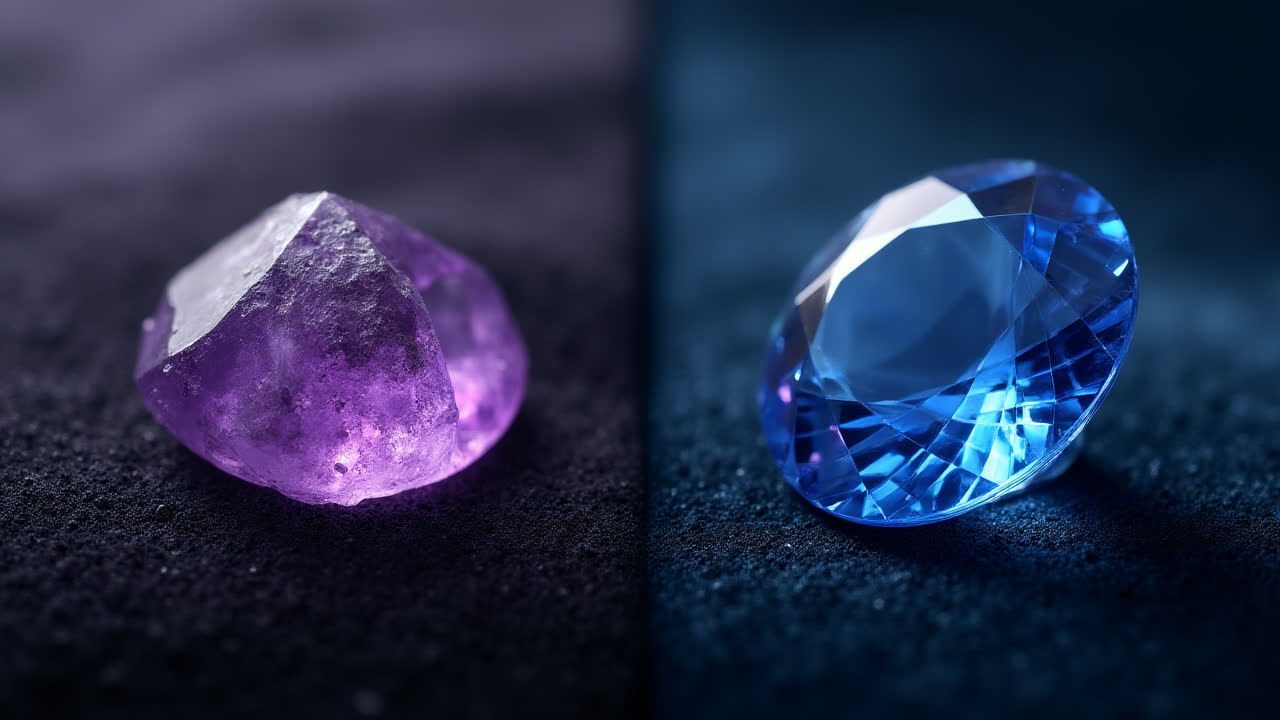
When exploring the dazzling world of gemstones, amethyst and blue sapphire stand out as two spectacular options with rich histories and stunning visual appeal. These beautiful gems might both catch your eye in a jewelry store, but they couldn't be more different in their composition, value, and characteristics. Have you ever wondered what makes each of these stones special and which might be best for your next jewelry purchase?
I recently found myself torn between these two gems when shopping for an anniversary gift. The purple allure of amethyst seemed perfect for my wife's tastes, but the deep blue elegance of sapphire kept drawing me back. This personal dilemma led me down a rabbit hole of gemstone research I'm excited to share with you today.
In this comprehensive guide, we'll explore everything from hardness and durability to color variations and investment value. Whether you're a gemstone enthusiast, jewelry shopper, or simply curious about these magnificent natural creations, this comparison will help you understand what sets these stones apart. Let's dive into the fascinating world of amethyst and blue sapphire!
Understanding Amethyst: The Purple Beauty
Amethyst captivates with its stunning purple hue, ranging from delicate lilac to deep reddish-purple tones. As a variety of crystalline quartz, this semi-precious gemstone has been prized throughout history and continues to be a favorite among gem enthusiasts worldwide. The name "amethyst" comes from the Greek word "amethystos," meaning "not drunken" – ancient Greeks believed wearing this stone protected against intoxication!
What makes amethyst particularly special is its remarkable color range within the purple spectrum. The most valuable specimens display rich, deep purple with reddish undertones – sometimes called "Deep Siberian" quality. The coloration comes from irradiation, iron impurities, and the presence of trace elements within the crystal structure. Interestingly, if amethyst is heated, it can actually transform into citrine (yellow) or prasiolite (green quartz), demonstrating the fascinating chemical properties of this gem.
You'll find amethyst used in everything from delicate earrings to bold statement necklaces. Its widespread availability makes it affordable for most jewelry lovers, yet high-quality specimens can still command impressive prices. As the February birthstone, it's particularly cherished by those born in this winter month. I've always found it interesting how amethyst can look dramatically different depending on lighting – sometimes appearing almost blue-violet under certain lights and shifting to a warmer purple in natural sunlight.
On the Mohs scale of mineral hardness, amethyst scores a respectable 7, making it suitable for everyday wear when properly set. Deposits of this beautiful purple gem can be found across the globe, with Brazil, Uruguay, Zambia, and Russia being notable sources. Each mining location tends to produce amethysts with slightly different characteristics, adding to the diversity and appeal of this gemstone.
Exploring Blue Sapphire: The Royal Gem
Blue sapphire belongs to the prestigious family of precious gemstones and has been associated with royalty and nobility throughout history. The rich, velvety blue of a fine sapphire evokes the depths of the ocean or the evening sky. This gem is a variety of the mineral corundum (aluminum oxide), and its striking blue color comes primarily from the presence of titanium and iron within its crystal structure.
When I first held a high-quality blue sapphire, I was struck by its incredible depth of color and the way it seemed to glow from within. There's something almost magnetic about a fine sapphire that's difficult to describe but impossible to forget. The most prized sapphires come from Kashmir, Myanmar (Burma), and Sri Lanka, though significant deposits are also found in Madagascar, Australia, and Thailand. Each origin produces sapphires with subtle variations in color and quality.
What truly sets blue sapphire apart is its exceptional hardness, rating 9 on the Mohs scale – second only to diamond among natural gemstones. This remarkable durability explains why sapphires are often passed down as family heirlooms, retaining their beauty across generations. The gem's hardness also makes it ideal for engagement rings and other frequently worn jewelry, as it resists scratching and maintains its polish excellently over time.
As the September birthstone, blue sapphire also carries rich symbolic meanings including wisdom, loyalty, and nobility. Throughout history, many royal engagement rings have featured stunning blue sapphires – perhaps most famously, the ring given by Prince Charles to Princess Diana (and later by Prince William to Kate Middleton). This royal connection has only enhanced the gem's prestige and desirability in the jewelry market.
While natural sapphires can be quite expensive, especially in larger sizes with exceptional color, there are options for every budget including heat-treated stones and those with minor inclusions that don't detract from the gem's beauty. The investment value of fine sapphires has historically been strong, with some exceptional specimens appreciating significantly over time.
Amethyst vs Blue Sapphire: Detailed Comparison
| Feature | Amethyst | Blue Sapphire |
|---|---|---|
| Mineral Classification | Quartz (Silicon Dioxide) | Corundum (Aluminum Oxide) |
| Hardness (Mohs Scale) | 7 | 9 |
| Color Range | Pale lilac to deep reddish-purple | Light blue to deep royal blue |
| Birthstone Month | February | September |
| Value Classification | Semi-precious | Precious |
| Refractive Index | 1.544 to 1.553 | 1.762 to 1.778 |
| Specific Gravity | 2.6 to 2.7 | 3.98 to 4.06 |
| Primary Sources | Brazil, Uruguay, Zambia, Russia | Kashmir, Myanmar, Sri Lanka, Madagascar |
Key Differences That Matter for Buyers
When deciding between amethyst and blue sapphire for your jewelry collection, several practical considerations should guide your choice. The most significant difference is durability. With a hardness of 9, blue sapphire is substantially more scratch-resistant than amethyst (hardness 7), making sapphire a better choice for everyday wear, especially in rings that frequently contact surfaces. During my years in jewelry retail, I saw numerous amethyst rings come in with surface abrasions that wouldn't typically occur on sapphires.
Price and availability create another stark contrast between these gems. Amethyst is significantly more affordable and available in larger sizes, while high-quality blue sapphires command premium prices that increase exponentially with size. For example, a 2-carat high-quality amethyst might cost $100-200, while a 2-carat fine blue sapphire could easily range from $2,000-$10,000 depending on quality factors. This price gap makes amethyst ideal for larger statement pieces, while sapphires are often reserved for smaller center stones where their color and brilliance can make a powerful impact despite the size.
Color stability differs dramatically between these gemstones as well. Amethyst can fade if consistently exposed to strong sunlight over long periods, requiring more careful wear and storage. I once had a customer disappointed to find her amethyst jewelry displayed in a sunny window had noticeably lightened after several months. Sapphires, by contrast, maintain their color exceptionally well under virtually all conditions, contributing to their reputation as excellent heirloom stones that retain beauty across generations.
Investment potential represents another crucial difference. Fine blue sapphires, especially those with exceptional color or noteworthy provenance, have historically appreciated in value. Amethyst, while beautiful, rarely functions as an investment stone due to its relative abundance. This distinction doesn't diminish amethyst's beauty or desirability for jewelry purposes, but it's worth considering for collectors thinking about long-term value retention.
Symbolic and historical associations might also influence your choice. Amethyst carries associations with spirituality, peace, and clarity of thought. Sapphire traditionally symbolizes wisdom, loyalty, and nobility. These associations make each stone appropriate for different occasions – amethysts for spiritual milestones or February birthdays, and sapphires for engagements, significant anniversaries, or September birthdays. The right choice depends entirely on the meaning you wish to convey through your gemstone selection.
Care and Maintenance Considerations
Proper care ensures your gemstone jewelry maintains its beauty for years to come, and the maintenance requirements differ significantly between amethyst and blue sapphire. Due to its lower hardness, amethyst requires more cautious handling to prevent scratches and abrasions. I've learned this lesson the hard way – my wife's amethyst pendant developed a small scratch after accidentally bumping against a granite countertop, something that likely wouldn't have happened with sapphire.
Cleaning methods also vary between these gems. While sapphires can withstand ultrasonic and steam cleaning methods typically used by professional jewelers, amethyst requires gentler treatment. For amethyst, the safest cleaning approach is warm, soapy water and a soft brush, avoiding harsh chemicals or high-heat cleaning methods. Sapphires can tolerate more aggressive cleaning techniques, though it's always wise to use the gentlest effective method for any fine jewelry.
Storage considerations represent another important difference. Amethyst should be kept away from prolonged direct sunlight and high heat, which can potentially fade its color over time. Both stones should be stored separately from other jewelry to prevent scratching – though in a mixed collection, your sapphires are more likely to damage other stones than be damaged themselves due to their exceptional hardness. Using individual pouches or a jewelry box with separated compartments provides ideal protection for both types of gemstones.
Regular professional inspection is recommended for all fine jewelry, but particularly for amethyst pieces worn frequently. Check prong settings carefully, as amethyst's lower hardness can sometimes lead to more rapid wear of the setting. With sapphires, while the stone itself is extremely durable, it's still important to check settings regularly as the metal components of jewelry are typically softer than the sapphire they hold and may wear down over time.
Frequently Asked Questions
Which is more valuable between amethyst and blue sapphire?
Blue sapphire is generally significantly more valuable than amethyst due to its rarity, hardness, and classification as a precious gemstone. While high-quality amethysts from premium sources like Russian Siberia can command respectable prices, they typically don't approach the value of fine blue sapphires. The price differential becomes even more pronounced with larger stones – a one-carat fine blue sapphire might cost twenty to fifty times more than an amethyst of comparable size and quality. This value difference reflects not only rarity but also the greater durability and historical prestige of sapphires.
Can amethyst be as durable as blue sapphire for everyday jewelry?
While amethyst is reasonably durable with a Mohs hardness of 7, it cannot match the exceptional durability of blue sapphire (Mohs 9). For everyday jewelry, especially rings that face frequent impact and contact with surfaces, sapphire offers superior scratch resistance and longevity. However, with proper care and appropriate settings, amethyst can still function well in everyday jewelry. Protective settings like bezel mounts or semi-bezel designs can shield amethyst edges from impacts. For truly everyday pieces that will face rough conditions, sapphire is the more practical choice, while amethyst is better suited for occasional wear or pieces less likely to face impacts, such as earrings or pendants.
What treatments are common for amethyst and blue sapphire?
Both gemstones commonly undergo treatments to enhance their appearance, though the types of treatments differ. For blue sapphires, heat treatment is the most prevalent enhancement method, used to improve color and clarity. This treatment is considered permanent and stable, which is why heat-treated sapphires are widely accepted in the marketplace. Other sapphire treatments include diffusion (adding color to the surface layer) and beryllium treatment (affecting color throughout the stone). Amethyst undergoes fewer treatments, with heat being the primary method – though ironically, heating amethyst typically converts it to citrine or prasiolite rather than enhancing its purple color. Unlike sapphires, most fine amethysts on the market are natural and untreated. Always ask about treatments when purchasing either gemstone, as treatment status affects both value and care requirements.
Conclusion: Making Your Choice
The choice between amethyst and blue sapphire ultimately depends on your specific needs, preferences, and budget. Amethyst offers remarkable beauty and variety at accessible price points, making it perfect for fashion-forward jewelry collections or for those who enjoy changing their accessories frequently. Its rich purple hues provide a distinctive look that complements many different styles and outfits. If you're drawn to purple tones, value versatility, and prefer larger gemstones without breaking the bank, amethyst could be your ideal choice.
Blue sapphire, on the other hand, represents a more significant investment but offers unparalleled durability and timeless appeal. Its connection to royalty and tradition makes it particularly appropriate for engagement rings, important anniversary gifts, or heirloom pieces meant to be passed down through generations. The deep blue color works with virtually any wardrobe and never goes out of style. For those prioritizing longevity, symbolic significance, and potential value appreciation, sapphire presents compelling advantages.
Both gemstones offer their own unique beauty and charm. Whether you choose the accessible luxury of amethyst or the enduring elegance of blue sapphire, understanding the key differences between these magnificent gems ensures your selection will bring joy and satisfaction for years to come. And who says you have to choose just one? Some of the most interesting jewelry collections incorporate diverse gemstones that each tell their own story and serve different purposes in a well-rounded jewelry wardrobe.