Autogamy, Geitonogamy & Xenogamy: Complete Plant Pollination Guide
Understanding Autogamy, Geitonogamy, and Xenogamy in Plant Pollination
Have you ever wondered how plants reproduce and why some flowers seem to do it all on their own while others rely on bees and butterflies? Well, you're about to discover the fascinating world of plant pollination methods. In the plant kingdom, there are three main modes of reproduction: autogamy, geitonogamy, and xenogamy. These might sound like tongue twisters, but understanding them is crucial for anyone interested in botany, gardening, or agriculture. Let's dive into this colorful world of plant love stories!
What Makes Self-Pollination Different from Cross-Pollination?
When it comes to plant reproduction, it's essentially a choice between keeping it in the family (self-pollination) or mixing up the gene pool (cross-pollination). Self-pollination happens when a flower's pollen fertilizes its own ovules or those on the same plant. Cross-pollination, on the other hand, involves pollen from one plant visiting the flowers of another plant entirely. This distinction matters because it determines whether a plant will produce offspring identical to itself or create genetic variations that might help the species adapt and survive future environmental challenges.
I still remember the day a friend asked me why her garden peas seemed to look exactly like the parent plants while her wildflowers created such diverse offspring. The answer lies in these pollination methods, and it's quite remarkable when you think about it - some plants prefer genetic stability while others embrace diversity as their survival strategy.
Autogamy: When Flowers Go Solo
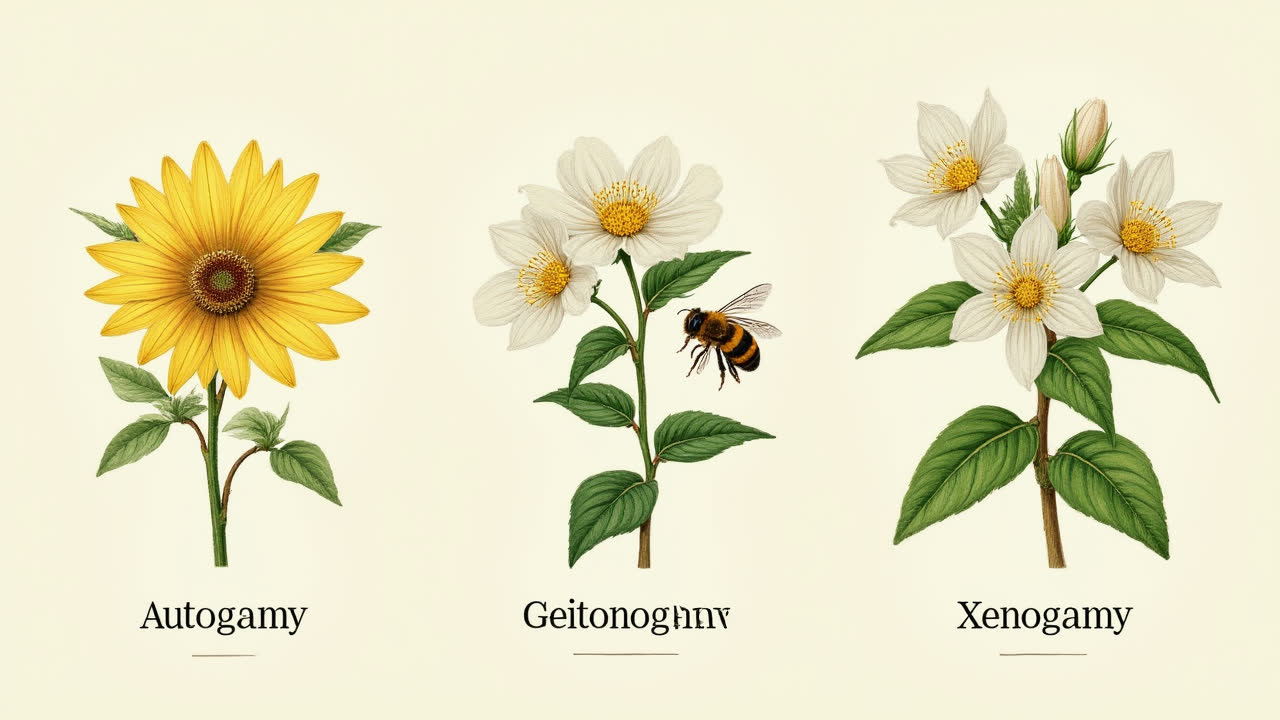
Autogamy is the ultimate "do-it-yourself" approach to pollination. In this process, pollen grains from a flower's anther find their way to the stigma of that very same flower. It's like a flower giving itself a high-five! This method produces offspring that are genetic clones of the parent plant, which can be both a blessing and a curse depending on environmental conditions.
You'll find this self-reliant method in sunflowers, orchids, peas, and tridax plants. Some of these clever flowers have adapted to shed pollen directly onto their stigma or even pollinate before they fully open. It's nature's way of ensuring reproduction even when pollinators are scarce. However, this genetic uniformity can make plants more vulnerable to diseases and environmental changes - a bit like putting all your eggs in one genetic basket.
What I find absolutely fascinating is that some orchids have pollinia (pollen masses) that actually bend themselves toward the stigma. It's like watching a botanical acrobat perform! This adaptation shows just how committed certain plants are to ensuring their own reproduction, even when external help isn't available.
Geitonogamy: The Family Affair
Geitonogamy is the middle ground between self-sufficiency and genetic diversity. In this method, pollen grains travel from one flower to another flower on the same plant. It's like having a family reunion - different members but the same genetic heritage. This process requires external help from pollinators like bees, beetles, or wind, but the end result is still genetically identical offspring.
Corn is perhaps the most well-known example of geitonogamy. If you've ever watched bees busily moving between corn tassels and silk, you've witnessed this process in action. Monoecious plants (those with both male and female flowers on the same plant) often use this method, and it's particularly common when flowers are clustered on a single stem.
While geitonogamy maintains the purity of parental characteristics - which farmers might appreciate for consistent crop quality - it still shares autogamy's limitation: no genetic variation. It's like nature's way of saying, "If it ain't broke, don't fix it," but without the backup plan that genetic diversity provides.
Xenogamy: Nature's Remix
Xenogamy is where the real genetic mixing happens. In this cross-pollination method, pollen from one plant visits flowers on a genetically different plant of the same species. This creates offspring with gene combinations that never existed before - nature's ultimate remix! It's the reason why kids sometimes have dad's eyes and mom's smile, but applied to the plant world.
To make xenogamy happen, plants pull out all the stops. They develop bright colors, sweet nectar, and enticing fragrances to attract pollinators. It's like throwing the best party possible to ensure your pollen gets a lift to the right neighborhood. Plants like squash, onions, broccoli, and spinach rely heavily on this method.
What's really clever is how some plants prevent self-pollination to force xenogamy. Through mechanisms like herkogamy (physical barriers), dichogamy (timing differences), and self-incompatibility (chemical blocks), these plants ensure genetic diversity. It's nature's way of saying, "Let's keep the gene pool fresh and exciting!"
The Evolution Connection
Here's where things get really interesting from an evolutionary perspective. While autogamy and geitonogamy produce genetically identical offspring (which can be great for maintaining successful traits), they don't contribute to evolutionary adaptation. Xenogamy, however, is the engine of plant evolution, creating new genetic combinations that might help species survive changing conditions.
Think of it this way: autogamy and geitonogamy are like photocopying the same page over and over, while xenogamy is like creating new paragraphs by combining sentences from different pages. Sometimes you'll get gibberish, but occasionally you'll create something that works even better than the original!
Comparing the Three Methods
| Feature | Autogamy | Geitonogamy | Xenogamy |
|---|---|---|---|
| Pollination Type | Self-pollination | Functional cross-pollination, genetic self-pollination | True cross-pollination |
| Genetic Result | Identical offspring | Identical offspring | Varied offspring |
| External Help Needed | No | Yes | Yes |
| Evolution Contribution | None | None | High |
| Adaptations | Direct pollen transfer, cleistogamy | Clustered flowers | Colorful petals, nectar, scent |
| Examples | Sunflowers, peas | Corn | Squash, onions |
| Vulnerability | High (no genetic diversity) | High (no genetic diversity) | Low (genetic diversity) |
| Reliability | Very high | Moderate (depends on pollinators) | Moderate (depends on pollinators) |
Which Method Wins?
You might be wondering: if xenogamy creates diversity and adaptation, why do plants bother with autogamy and geitonogamy at all? Well, each method has its sweet spot. Autogamy ensures reproduction even when conditions are tough - think of isolated plants or harsh climates where pollinators are scarce. Geitonogamy combines the reliability of self-pollination with some benefits of external pollen movement. Xenogamy, while providing the best genetic outcomes, depends heavily on environmental conditions and pollinator availability.
In my own garden, I've noticed that during particularly hot summers when bees are less active, self-pollinating tomatoes keep producing while my squash struggles. It's nature's way of having multiple backup plans!
Frequently Asked Questions
Can plants switch between different pollination methods?
Many plants are flexible and can use multiple pollination methods depending on conditions. For example, some flowers may use autogamy as a backup when pollinators are scarce, but prefer xenogamy when conditions are favorable. This adaptability helps ensure reproductive success across varying environmental conditions.
Why do some plants prevent self-pollination if it's more reliable?
Plants prevent self-pollination to maintain genetic diversity, which helps them adapt to environmental changes and resist diseases. While self-pollination may seem more reliable in the short term, genetic diversity is crucial for long-term species survival and evolution.
How can gardeners encourage specific pollination methods?
Gardeners can encourage cross-pollination by planting diverse varieties close together and attracting pollinators with companion plants. For self-pollinating crops, proper plant spacing and environmental conditions like appropriate humidity and temperature will support successful pollination regardless of pollinator presence.
Conclusion: Nature's Pollination Toolbox
Understanding autogamy, geitonogamy, and xenogamy gives us insight into the remarkable strategies plants use to ensure their survival. Each method serves a purpose, from the reliability of self-pollination to the adaptability provided by cross-pollination. Whether you're a botanist, gardener, or just someone curious about the natural world, appreciating these pollination methods helps you understand the delicate balance of plant reproduction.
Next time you're in a garden or walk through a field, take a moment to appreciate the invisible dance of pollination happening all around you. Each flower you see might be using one of these three fascinating methods to create the next generation of plants. Isn't nature amazing?