Bleaching vs. Dyeing Hair: Complete Guide to Hair Transformation
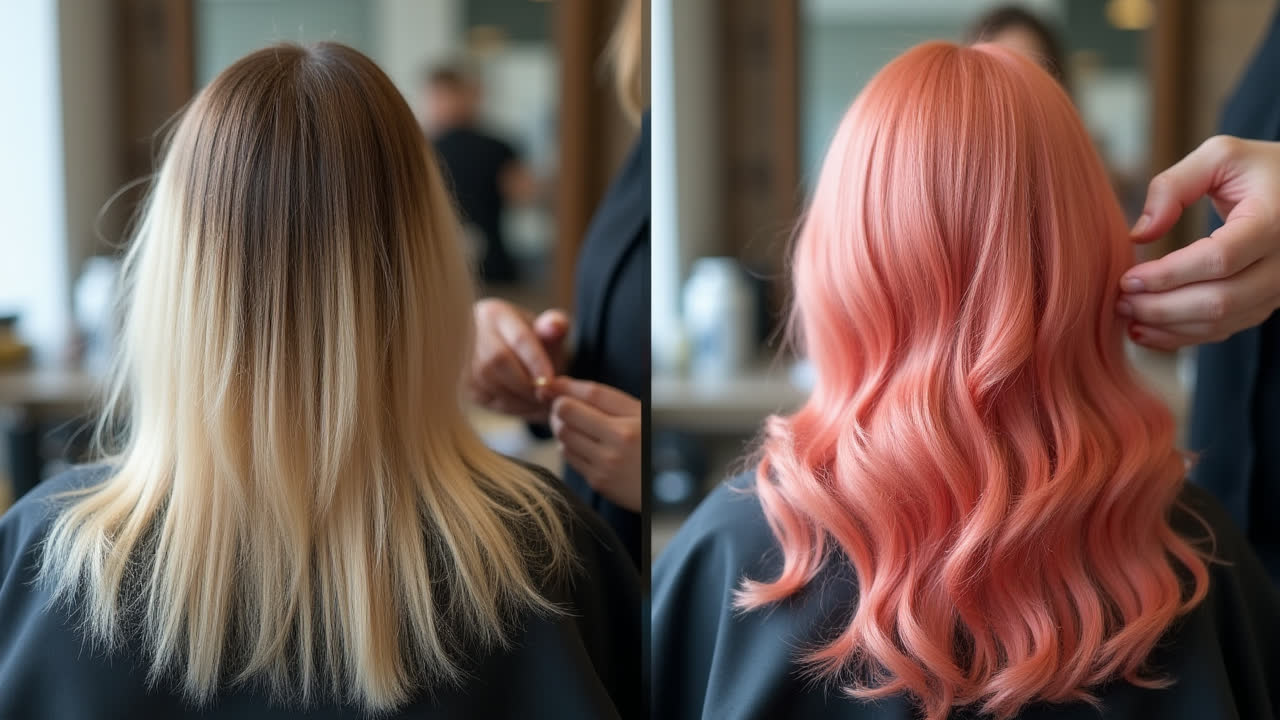
Looking to transform your hair color but confused about whether to bleach or dye? You're not alone. The world of hair transformation can be overwhelming, with countless options and technical terms that might leave you puzzled. Bleaching and dyeing hair are two very different processes that achieve distinct results, and choosing the wrong one could leave you disappointed—or worse, with damaged hair.
Have you ever wondered why you can't simply dye dark hair blonde? Or why that vibrant blue you tried didn't show up on your brunette locks? The answer lies in understanding the fundamental difference between these two popular hair coloring techniques. In this comprehensive guide, I'll walk you through everything you need to know about bleaching versus dyeing, helping you make an informed decision for your next hair transformation.
Understanding Hair Color: The Science Behind Your Strands
Before diving into the differences between bleaching and dyeing, it's important to understand the science of hair color. Just like your skin, your hair contains natural pigments called melanin. These tiny color molecules determine whether your natural hair is black, brown, red, or blonde. The more melanin you have, the darker your hair will be.
I remember when I first learned this from my stylist—it was like a lightbulb moment! Suddenly all those failed at-home color experiments made sense. Your natural hair color is essentially the starting canvas for any color transformation you want to achieve. And this starting point significantly impacts which process—bleaching or dyeing—you'll need to use.
When light hits your hair, these melanin pigments absorb some wavelengths and reflect others, creating what we perceive as color. Dark hair contains more eumelanin (brown/black pigments), while red hair has more pheomelanin (red/yellow pigments). Blonde hair simply has less of both types. This melanin structure becomes crucial when we talk about changing hair color, as any new color must interact with or replace these existing pigments.
Think of hair coloring like painting. If you have a dark blue wall and want to paint it yellow, you can't just apply yellow paint and expect it to look right—you'd need to prime the wall first with a white base. Hair coloring works similarly, which is why understanding the difference between bleaching (removing color) and dyeing (adding color) is so important for achieving your desired look.
What is Bleaching? Breaking Down the Lightening Process
Bleaching is essentially a color removal process. When you bleach your hair, you're not adding a new color—you're stripping away the existing melanin that gives your hair its natural shade. The chemicals in hair bleach, typically hydrogen peroxide and ammonia, work together to penetrate the hair shaft and dissolve the melanin pigments through oxidation.
I've gone through the bleaching process twice myself, and I'll never forget that distinct smell and the tingling sensation on my scalp. It's quite a different experience from dyeing! During bleaching, your hair cuticles (the protective outer layer of each strand) open up, allowing the bleaching agent to reach the inner cortex where melanin resides. This process progressively lightens your hair, taking it through various stages from dark to red to orange to yellow and finally to a pale yellow or white.
The end result of bleaching is not a new color per se, but rather the absence of color. Most people don't realize that bleached hair typically has a yellowish tint—that's because after removing the dark pigments, what remains are the lighter, more stubborn yellow pigments that are harder to remove. This is why many people who want platinum or silver hair need to tone their bleached hair afterward to neutralize that yellow.
One crucial thing to understand about bleaching is that it's permanent. Once those melanin molecules are dissolved, they're gone for good. There's no going back to your natural color except by waiting for new hair to grow out. This permanence is both the blessing and curse of bleaching—it provides a clean slate for vibrant colors but commits you to a long-term change.
Bleaching is also notorious for causing damage to hair. By opening up the hair cuticles and breaking down proteins within the hair shaft, bleach can leave your locks dry, brittle, and more prone to breakage. This is why professional hairstylists often recommend spacing out bleaching sessions and following up with intensive conditioning treatments. The more dramatic the lightening (going from black to platinum, for instance), the more damaging the process will be.
What is Dyeing? Adding New Color to Your Hair
Unlike bleaching, dyeing hair involves adding new color pigments to your strands. Hair dye contains artificial or natural color molecules that attach to or penetrate the hair shaft, depending on whether you're using temporary, semi-permanent, or permanent dye. The result is a new hair color that can be similar to or drastically different from your starting shade.
When I first dyed my hair auburn from my natural brown, I was amazed at how different the process felt compared to bleaching. There was no burning sensation, and my hair actually felt softer afterward! That's because many modern hair dyes include conditioning agents alongside the color pigments, helping to minimize damage to your strands.
Temporary dyes simply coat the outer hair shaft and wash out after a few shampoos. They're like makeup for your hair—easy to apply and just as easy to remove. Semi-permanent dyes penetrate the hair cuticle slightly but don't contain peroxide, so they gradually fade over 4-12 washes. These are great for experimenting with color without long-term commitment.
Permanent dyes, on the other hand, work through a chemical reaction. They typically contain a developer (usually hydrogen peroxide) that opens the hair cuticle slightly and allows the color molecules to enter the hair shaft. Once inside, these molecules expand and become too large to wash out, resulting in long-lasting color. Despite being called "permanent," these dyes do fade over time as the artificial pigments gradually wash away.
The key limitation of dyeing is that you generally can't go lighter than your current color without bleaching first. Hair dye can deposit new pigments but doesn't effectively remove existing ones. This is why achieving pastel pink or bright blue on dark hair isn't possible with dye alone—you'd need to bleach first to remove the dark pigments before the new colors can show up vibrantly.
Bleaching vs. Dyeing: Key Differences Explained
| Comparison Point | Bleaching Hair | Dyeing Hair |
|---|---|---|
| Basic Process | Strips color pigments from hair | Adds color pigments to hair |
| Primary Purpose | Lightens hair color | Changes hair color (darker or same level) |
| Color Options | Limited to lighter shades only | Wide range of colors and shades |
| Permanence | Completely permanent (until hair grows out) | Can be temporary, semi-permanent, or permanent |
| Damage Level | Usually more damaging to hair structure | Generally less damaging than bleaching |
| Upkeep Required | Root touch-ups as hair grows; toning to combat brassiness | Regular color refreshing as dye fades |
| Suitability for Dark Hair | Necessary to achieve light colors on dark hair | Can go darker but not lighter without bleaching first |
| Chemical Process | Oxidation that breaks down melanin | Deposition of artificial pigments into hair |
When to Choose Bleaching Over Dyeing
Deciding whether to bleach or dye your hair depends largely on your starting color and desired result. Bleaching is typically the right choice when you want to go significantly lighter than your current shade. If you have dark brown hair and dream of being platinum blonde, bleaching is unavoidable. Similarly, if you want vibrant fashion colors like pink, blue, or purple on naturally dark hair, you'll need to bleach first to create a light base that allows these colors to show up true to tone.
I learned this lesson the hard way when I once tried to dye my dark brown hair purple without bleaching first. The result? A barely-there hint of purple that was only visible in direct sunlight. What a disappointment! If you're after a dramatic transformation—especially one that involves going lighter—bleaching is usually necessary.
Bleaching is also the choice for those who want to create a "blank canvas" for creative coloring. Many professional colorists bleach hair first before applying fashion colors because it allows for the most accurate and vibrant results. This technique is particularly important for achieving pastel shades, which rely on having an almost-white base to look as intended.
However, before choosing bleaching, you should consider your hair's health and condition. Virgin hair (hair that has never been chemically processed) generally tolerates bleaching better than hair that's already been colored or treated. If your hair is already damaged, dry, or brittle, you might want to reconsider bleaching or at least space out the process over multiple sessions to minimize further damage.
It's also worth considering your lifestyle and maintenance commitment. Bleached hair requires more upkeep than dyed hair—from purple shampoos to combat brassiness to deep conditioning treatments to restore moisture. Growing out bleached hair also means a more obvious root line than many dyed colors, especially if your natural shade is dark.
When to Choose Dyeing Over Bleaching
Dyeing is generally the better option when you want to maintain your hair's health while still changing its color. If you're looking to go darker or to a similar level of lightness with a different tone, dyeing alone can achieve excellent results without the damage associated with bleaching. For instance, if you're naturally medium brown and want to go auburn, dark red, or black, dye is all you need.
After my bleaching experiences left my hair feeling like straw, I switched to demi-permanent dyes in darker shades for a while to give my hair a break. The difference in how my hair felt and behaved was dramatic! Dyeing is much gentler on your strands, making it ideal for those with already compromised hair or those who prefer to prioritize hair health.
Dyeing is also preferable if you're looking for a low-commitment color change. With options ranging from wash-out temporary colors to semi-permanent dyes that fade gradually, you can experiment with new looks without being stuck with them for months or years. This flexibility makes dyeing perfect for seasonal color changes or trying out trends without a long-term commitment.
Another scenario where dyeing is advantageous is when you're dealing with gray coverage. Most gray hair can be effectively colored with dye alone, without the need for pre-lightening. In fact, many formulations specifically designed for gray coverage work better than trying to bleach and then re-color gray strands.
Dyeing is also generally more budget-friendly and can often be successfully done at home, particularly when you're making subtle changes. While dramatic transformations usually benefit from professional expertise, simple color refreshes or slight shade adjustments can be achieved with quality box dyes and careful application.
Hair Care After Bleaching vs. After Dyeing
Caring for bleached hair requires a more intensive routine than caring for dyed hair. Since bleaching damages the hair's structure by opening the cuticle and breaking down proteins, bleached hair needs extra protein treatments, deep conditioning masks, and moisture-restoring products. Bleached hair is also more porous, which means it can absorb water quickly but also loses it rapidly—leading to that characteristic dry, straw-like texture if not properly maintained.
When I bleached my hair, I had to completely overhaul my hair care routine. Suddenly I was using purple shampoo twice a week to combat yellowing, doing weekly protein treatments, and barely heat styling to prevent further damage. The upkeep was significant but necessary to keep my hair looking and feeling its best.
Bleached hair also requires toning to maintain the desired shade. Whether you want a cool platinum, a warm honey blonde, or a fashion color, toners help neutralize unwanted tones (usually brassiness) that emerge as bleached hair is exposed to the environment. These toners need to be reapplied regularly as they wash out over time.
In contrast, caring for dyed hair is generally simpler. While color-safe shampoos and conditioners are recommended to prevent fading, dyed hair doesn't typically require the same level of protein reconstruction or intensive conditioning. The main concern with dyed hair is color preservation rather than structural repair.
Both bleached and dyed hair benefit from reduced washing (to preserve color and prevent drying), protection from UV rays (which can fade color and damage hair), and minimal heat styling. However, these practices are absolute musts for bleached hair, while they're more like strong recommendations for dyed hair.
Common Myths About Bleaching and Dyeing
There are numerous misconceptions about hair coloring that can lead to disappointing results or unexpected damage. One common myth is that you can lighten already-dyed hair with more hair dye. In reality, hair dye cannot remove artificial pigments—only bleach can do that. If you've dyed your hair darker and want to go lighter, you'll need to use a color remover or bleach, not another box of dye.
Another widespread belief is that bleaching will make dark hair blonde in one session. I've had friends show up at the salon with photos of platinum blondes, expecting to leave looking the same that day despite starting with black hair! In truth, going from very dark to very light often requires multiple bleaching sessions spaced weeks apart to minimize damage. Patience is key when dramatically lightening hair.
Many people also think that bleaching and dyeing damage hair equally, which isn't accurate. While both processes can cause some damage, bleaching is significantly more damaging because it breaks down the hair's structure to remove pigment, whereas dyeing merely deposits color without necessarily altering the hair's integrity as drastically.
There's also the myth that natural alternatives like lemon juice or honey are just as effective as commercial bleach. While these natural ingredients do have mild lightening properties, they cannot create the same level of lift as chemical bleaches and often cause dryness without delivering satisfactory results.
Finally, some believe that bleached or dyed hair cannot be healthy. While these processes do cause damage, with proper care and maintenance—including professional treatments, quality products, and patience—colored hair can still look and feel healthy. The key is understanding the level of commitment required and being realistic about what your hair can handle.
Making the Right Choice for Your Hair Transformation
Choosing between bleaching and dyeing comes down to understanding what each process does and matching that to your desired outcome. If you want to go lighter or achieve vibrant fashion colors, bleaching is usually necessary despite its more damaging nature. If you're happy to maintain or darken your current shade, dyeing offers a gentler alternative with more flexibility.
Remember that dramatic color transformations are often best left to professionals who can assess your hair's condition, create a plan that minimizes damage, and use high-quality products that protect your strands throughout the process. At-home coloring can work well for subtle changes or maintenance, but significant shifts usually benefit from expert guidance.
Whichever route you choose, be prepared to adjust your hair care routine accordingly. Investing in quality color-safe products, treatments specific to your hair's needs, and protective styling habits will help maintain both your new color and your hair's health in the long run.
Your hair transformation journey should be exciting, not anxiety-inducing. Armed with knowledge about how bleaching and dyeing differ, you can now make an informed decision that balances your color goals with the health of your hair. After all, the most beautiful hair color is one that not only looks great but also keeps your locks feeling and behaving their best.
Frequently Asked Questions About Bleaching and Dyeing Hair
Can I bleach my hair at home safely?
While it's possible to bleach your hair at home, it's one of the riskier DIY hair treatments. If you do choose to bleach at home, start with a lower volume developer (20 volume rather than 30 or 40), never apply to already damaged hair, follow the instructions meticulously, and have a timer handy. Always do a strand test first to check how your hair reacts. For dramatic lightening or if you have very dark or previously dyed hair, I strongly recommend seeing a professional to avoid irreversible damage, uneven results, or even chemical burns.
How long should I wait between bleaching sessions?
Most hair professionals recommend waiting at least 4-6 weeks between bleaching sessions to give your hair time to recover. During this period, focus on deep conditioning treatments, protein masks, and minimal heat styling to restore your hair's health. If your hair feels extremely damaged (very stretchy when wet, breaking easily, or gummy in texture), wait even longer or consult a professional before proceeding with another bleach application. Remember that achieving very light hair from a dark base often takes multiple sessions over several months—patience leads to much healthier results.
Can I dye my hair lighter without bleaching first?
Generally, you cannot dye your hair significantly lighter without bleaching first. Hair dye deposits color but doesn't effectively remove existing pigment. If you have virgin (never-colored) light brown or dark blonde hair, you might achieve a slightly lighter result with a high-lift dye, which contains some lightening agents. However, these won't work on previously dyed hair or very dark natural hair. For noticeable lightening, especially more than 1-2 levels, bleaching is necessary. There are color-removing products that can strip artificial color (not your natural pigment) which might be an option if you're trying to remove a previous dye job before recoloring.