Controlled vs Uncontrolled Chain Reactions: Key Differences
Controlled vs Uncontrolled Chain Reactions: Key Differences
The difference between controlled and uncontrolled chain reactions is critical for understanding nuclear physics and its applications. When we talk about chain reactions, whether in nuclear reactors or atomic bombs, how these reactions are managed makes all the difference between productive energy generation and catastrophic destruction. Understanding this distinction helps us appreciate the careful science behind nuclear power and the terrifying potential of uncontrolled nuclear processes.
What is a Chain Reaction?
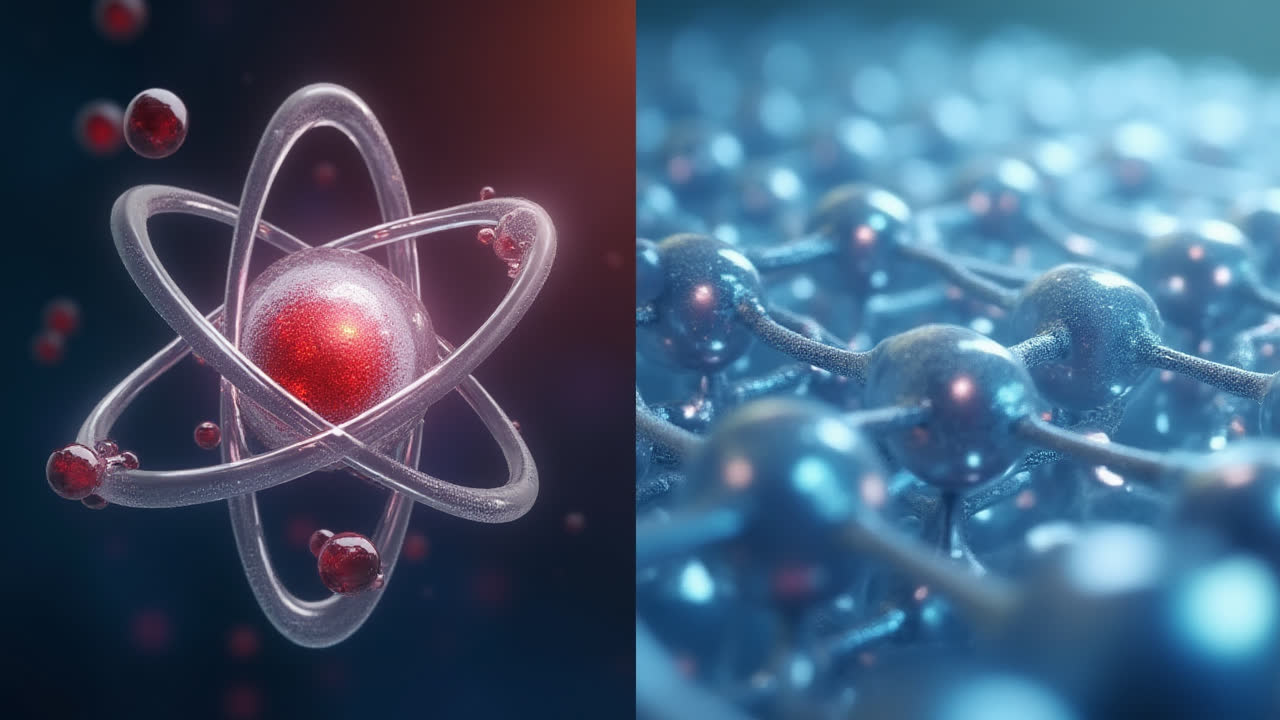
At its core, a chain reaction is a process where the products of one reaction trigger additional reactions of the same kind. In nuclear physics, this typically involves the splitting of atomic nuclei (fission), which releases neutrons that can then cause more atoms to split. It's like a row of dominoes falling, except in this case, each domino knocks down multiple others, creating an exponential effect.
The key to any chain reaction lies in what scientists call "criticality." This refers to the balance between neutrons being produced and those being absorbed or lost. When a system reaches critical mass, it can sustain a chain reaction on its own. The big question becomes: Can we control this process?
Controlled Chain Reactions: The Heart of Nuclear Power
In controlled chain reactions, scientists employ sophisticated methods to regulate the rate of nuclear fission, ensuring a steady, manageable energy release. Nuclear power plants rely on these carefully managed processes to generate electricity safely. Control rods play a pivotal role here, absorbing excess neutrons and preventing the reaction from accelerating beyond safe limits.
What really sets controlled reactions apart is their stability. The reaction rate remains constant or changes only gradually, allowing operators to adjust power output as needed. This controlled environment enables us to harness nuclear energy for beneficial purposes, from powering cities to propelling submarines. Engineers maintain this delicate balance through constant monitoring and precise adjustments of control rod positions.
The temperature in controlled reactions remains manageable, typically ranging from 300°C to 600°C in modern reactors. This heat is captured through coolant systems and converted into steam, which drives turbines to generate electricity. The entire process operates within carefully designed safety parameters, with multiple backup systems ready to shut down the reaction if anything goes wrong.
Uncontrolled Chain Reactions: The Destructive Potential
When chain reactions escape control, they become exponentially dangerous. Uncontrolled chain reactions occur when nothing limits the neutron production rate, leading to a rapid, self-accelerating process. The energy release happens almost instantaneously, with temperatures soaring to millions of degrees within microseconds.
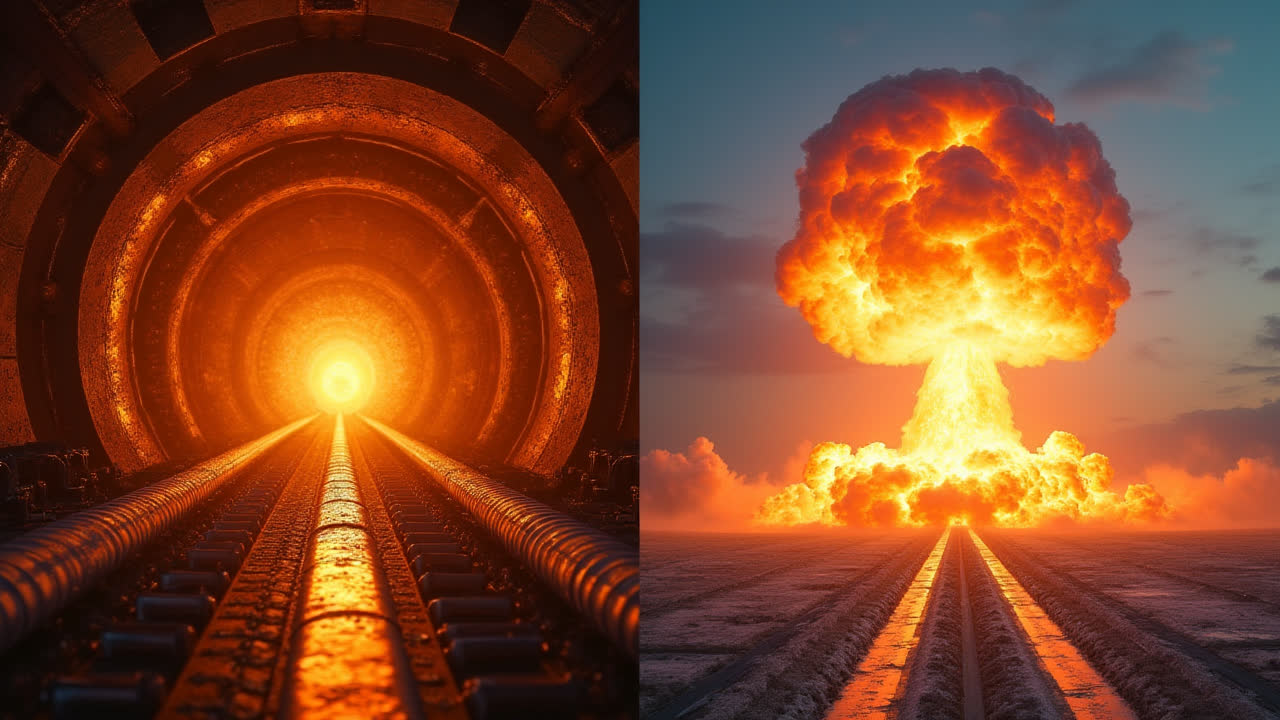
The contrast is stark: while controlled reactions release energy steadily over time, uncontrolled reactions unleash their power in an explosive burst. This difference explains why nuclear weapons produce devastating blasts while nuclear reactors generate reliable electricity. Without moderation, each fission event triggers multiple others, creating an exponential increase in energy release that cannot be stopped once initiated.
Historical examples, such as the Chernobyl disaster, demonstrate what happens when control measures fail. In that tragic case, a power surge combined with a design flaw led to an uncontrolled increase in reactor power, resulting in steam explosions and the release of radioactive materials. Such incidents underscore the vital importance of maintaining strict control over nuclear chain reactions.
| Aspect | Controlled Chain Reaction | Uncontrolled Chain Reaction |
|---|---|---|
| Rate of Reaction | Steady and manageable | Rapid and exponential |
| Energy Release | Gradual and sustained | Sudden and explosive |
| Neutron Management | Regulated by control rods | No moderation or control |
| Purpose | Power generation | Weapons or accidents |
| Temperature Control | Maintained within safe limits | Reaches millions of degrees |
| Timing | Continuous operation | Instantaneous reaction |
| Safety Measures | Multiple control systems | No safety controls |
| Applications | Nuclear power plants | Nuclear weapons, accidents |
The Physics Behind the Control
The secret to controlling chain reactions lies in neutron moderation and absorption. Moderators like water or heavy water slow down fast neutrons, making them more likely to cause fission in uranium-235. Control rods, typically made from boron or cadmium, absorb excess neutrons and can be inserted or withdrawn to adjust the reaction rate precisely.
This delicate dance of nuclear physics requires constant attention. Reactors operate at what's called "critical" – not "supercritical" where reactions accelerate, nor "subcritical" where they die out. Maintaining criticality is an art and science, with sophisticated computer systems monitoring hundreds of parameters thousands of times per second. It's rather like trying to balance a ball on top of a needle – challenging, but absolutely essential for safe operation.
Real-World Applications and Implications
The practical applications of controlled chain reactions extend far beyond electricity generation. Medical isotopes for cancer treatment, research reactors for scientific studies, and naval propulsion systems all rely on carefully managed nuclear fission. These applications demonstrate how controlling chain reactions has become an essential part of modern life, often in ways most people never consider.
On the other hand, the need to prevent uncontrolled reactions drives much of international nuclear policy. Treaties and safeguards exist precisely to ensure nuclear technology remains controlled and beneficial rather than destructive. The proliferation of nuclear weapons technology remains a global concern, highlighting the dual-use nature of nuclear science.
Looking to the future, the development of newer reactor designs aims to make controlled chain reactions even safer. Generation IV reactors and small modular reactors (SMRs) incorporate passive safety features that make uncontrolled reactions physically impossible, not just unlikely. These advances may help address some of the legitimate concerns people have about nuclear energy while maintaining its benefits for clean electricity generation.
Frequently Asked Questions
Can a nuclear reactor become an atomic bomb?
No, a nuclear reactor cannot explode like an atomic bomb. Power reactors use enriched uranium (3-5% U-235) while bombs require highly enriched uranium (90%+ U-235). The reactor's design and fuel composition physically prevent a nuclear explosion, though other types of explosions (steam, hydrogen) can occur if control systems fail.
How long can a controlled chain reaction continue?
A controlled chain reaction can continue indefinitely as long as there's sufficient nuclear fuel and proper control measures are maintained. Nuclear reactors typically operate for 12-24 months between refueling cycles, and some research reactors have operated continuously for decades. The limiting factor is usually fuel depletion and maintenance requirements, not the chain reaction itself.
What happens if control is lost in a nuclear reactor?
Modern reactors have multiple safety systems that automatically shut down the chain reaction if control is lost. These include emergency control rod insertion, safety cooling systems, and containment structures. While loss of control can lead to overheating and potential core damage, as seen at Fukushima in 2011, these systems are designed to prevent widespread radioactive release and public harm.