Daisy vs Gerbera: 7 Key Differences Every Gardener Should Know
Daisy vs Gerbera: 7 Key Differences Every Gardener Should Know
When you're exploring the world of flowers, it's easy to confuse daisies and gerberas. Both belong to the same family and share that classic daisy structure we all love. But trust me, once you know what to look for, the differences become crystal clear!
I spent years mixing these beauties up in my own garden. One day, I planted what I thought were simple daisies, only to find enormous, vibrant blooms popping up weeks later. That's when I learned these flowers aren't twins - they're more like cousins with distinct personalities.
Let's dive into what makes these popular flowers unique. Whether you're planning your garden or just curious about these cheerful blooms, this guide has everything you need.
Understanding the Flower Family Connection
Both daisies and gerberas belong to the Asteraceae family. This massive plant family includes sunflowers, zinnias, and chrysanthemums too. What's interesting is how this family connection shows in their structure, but the similarities often end there.
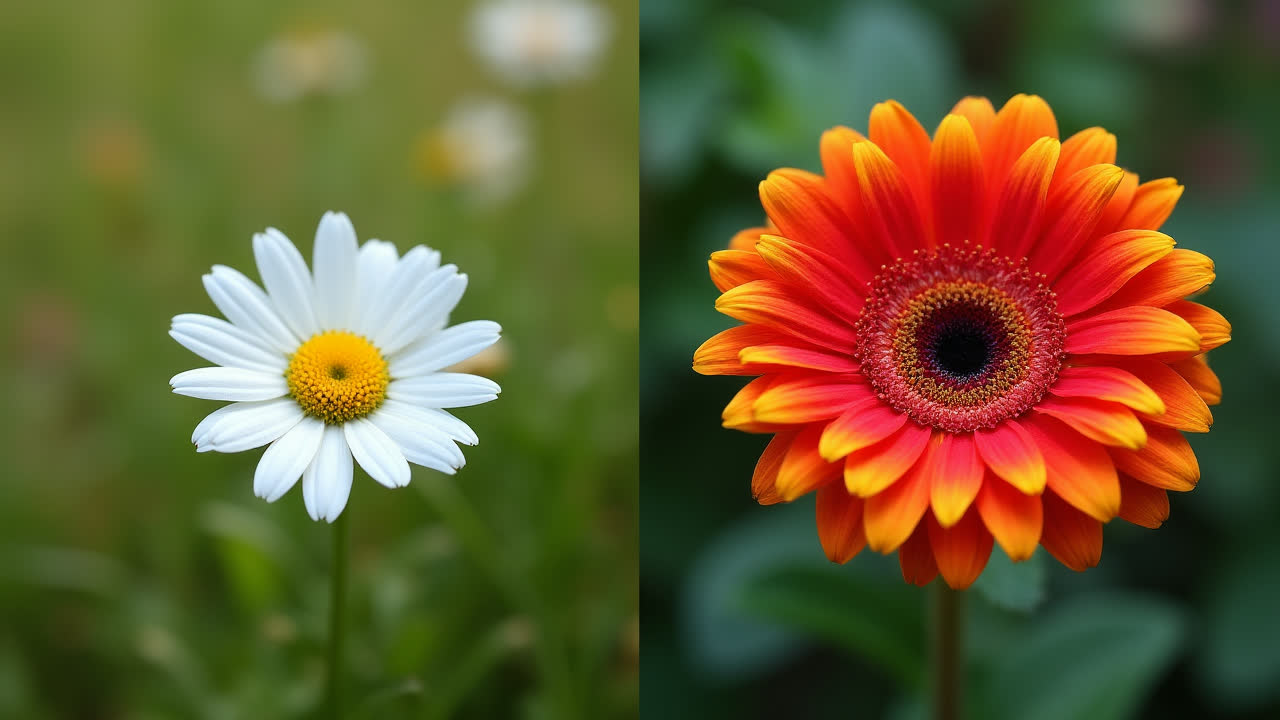
Think of it like human families - you can spot the resemblance, but each member has their own unique traits. The common daisy (Bellis perennis) is that classic white flower with a yellow center. Meanwhile, the gerbera daisy (Gerbera jamesonii) bursts with vibrant colors and demands attention in any garden.
Size Matters: Flower Dimensions
Here's where things get obvious. Daisies are like the humble friend in the group - they range from 1 to 4 inches in diameter. Most times, you'll find them closer to the 2-inch mark. They're perfect for subtle garden borders or naturalizing wild areas.
Gerbera daisies, on the other hand, make a statement. These show-offs can reach up to 5 inches across! I've seen some varieties that are almost plate-sized. They're the flowers you pick when you want something that screams "look at me" in a good way.
Color Palette: From Classic to Kaleidoscope
Traditional daisies keep it simple - usually white petals with yellow centers. Some varieties like African daisies (Osteospermum) branch out into pinks, purples, and oranges, but the selection is limited compared to their flashy cousins.
Gerberas are the artists of the flower world. Pink, red, orange, yellow, white, peach, salmon, purple, violet, lavender - there's even bicolored varieties! It's like they raided a rainbow and brought every color back to your garden.
| Feature | Daisy | Gerbera |
|---|---|---|
| Flower Size | 1-4 inches diameter | Up to 5 inches diameter |
| Petal Shape | Narrow, pointed, less symmetrical | Wide, flat, highly symmetrical |
| Color Range | Primarily white/yellow, some pink/red varieties | Full rainbow spectrum + bicolored options |
| Hardiness | Hardy perennials (zones 4-8) | Tender perennials (zones 8-10b) |
| Drought Tolerance | High | Low (sensitive to overwatering) |
| Maintenance | Low (minimal fertilizer needed) | Medium to high (regular fertilization required) |
| Propagation | Easy by seed or division | Division preferred (seeds germinate slowly) |
| Growing Height | 2-12 inches | 12-18 inches |
Petal Structure: The Details That Tell Them Apart
Want to know a quick identification trick? Look at those petals! Daisy petals are narrow and pointed, almost like they're reaching for the sky. They might have a bit of an uneven appearance, which actually adds to their charm.
Gerbera petals are wider, flatter, and almost unnaturally perfect in their symmetry. It's like someone arranged them with a ruler and protractor. I sometimes think of them as the beauty queens of the flower world - always perfectly groomed and positioned.
Care Requirements: From Easy-Going to Particular
Daisies are the ultimate low-maintenance friends. They can handle poor soil, drought conditions, and still bounce back smiling. I've seen them thrive in forgotten corners of gardens where nothing else grows.
Gerberas are more high-maintenance. They need regular feeding, proper watering (not too much!), and prefer well-drained soil. They're like that friend who needs specific coffee orders and can't handle too much morning sun.
Growing Zones and Climate Preferences
Here's where geography matters. Daisies are hardy and can survive in zones 4-8. They're true perennials in most climates and can handle cold winters without breaking a sweat.
Gerberas are tender perennials that only survive year-round in zones 8-10b. In cooler areas, they're grown as annuals or brought indoors for winter. They're like snowbirds - they prefer to vacation where it's warm!
Propagation Methods: Seeds vs. Division
Growing daisies from seed is practically foolproof. Just scatter them and wait for nature to work its magic. Division is equally simple - dig up a clump in spring or fall and separate the plants.
Gerbera seeds are notorious for slow germination. Most gardeners prefer division, which ensures you get the exact color you want. It's like choosing a paint color - division guarantees results, while seeds might surprise you.
Best Uses in the Garden and Home
Daisies are perfect for borders, wildflower gardens, and ground cover. They spread easily and create that cottage garden feel. I love them in mixed bouquets where they add that simple elegance without overwhelming other flowers.
Gerberas steal the show as focal points in formal gardens or container displays. They're fantastic for cutting gardens and make stunning centerpieces that last longer than most flowers in vases.
Seasonal Blooming Patterns
Most daisies bloom continuously from spring through fall. Some varieties might slow down in peak summer heat, but they keep producing those cheerful white flowers for months.
Gerberas can bloom all year in ideal conditions but typically peak in spring and fall. Summer heat can stress them, especially in warmer zones. They're like fair-weather friends - they prefer moderate temperatures.
Common Varieties and Cultivars
Popular daisy varieties include the classic English daisy (Bellis perennis), Shasta daisy, and African daisies. Each has its own charm and adaptation needs.
Gerbera varieties are numbered in the hundreds! From the compact 'Festival' series to the giant 'Giant' series, there's a gerbera for every garden style and personal preference.
Symbolic Meanings and Cultural Significance
Daisies symbolize innocence, purity, and new beginnings. They're often associated with childhood memories and simple pleasures. In flower language, they represent loyal love and patience.
Gerberas symbolize cheerfulness, beauty, and innocence too, but with an added layer of inner strength. Their bold appearance makes them symbols of happiness and positivity in many cultures.
Frequently Asked Questions
Can I grow both daisies and gerberas together in the same garden?
Yes, you can definitely grow both together! Just remember that daisies are more adaptable to various conditions while gerberas need specific care. Place daisies in areas with partial shade and average soil, while gerberas should go in well-drained areas with full morning sun.
Do gerberas come back every year like daisies?
In warm climates (zones 8-10b), gerberas can return as perennials. However, in cooler areas, they're typically grown as annuals or brought indoors for winter. Daisies are true perennials in most zones and reliably return each year with minimal care.
Which flower is better for beginners?
Daisies are much better for beginners. They're incredibly forgiving, can grow in various conditions, require minimal maintenance, and tolerate mistakes well. Gerberas demand more attention and specific care conditions, making them better suited for gardeners with some experience.
Final Thoughts
Choosing between daisies and gerberas really comes down to your garden goals and care commitment. Both flowers bring joy to any garden, but they do it in different ways.
If you want reliable, low-maintenance blooms that spread happiness without demanding much attention, daisies are your flowers. They're like the reliable friend who's always there, never complains, and brightens your day.
But if you're ready to show off and don't mind putting in extra effort for spectacular results, gerberas will reward you with their stunning display. They're the divas of the flower world - high maintenance, but oh so worth it!
Whatever you choose, these beautiful flowers will bring color and life to your garden. And isn't that what gardening is all about?


Related Posts