Foliose vs Fruticose Lichen: 8 Key Differences Explained
What Are Lichens?
Have you ever noticed those strange, colorful patches growing on tree barks, rocks, or old walls? Those fascinating organisms are likely lichens, one of nature's most interesting symbiotic relationships. Lichens represent a remarkable partnership between fungi and algae (or cyanobacteria), creating composite organisms that can thrive in diverse and often harsh environments where neither partner could survive alone.
While they might seem insignificant at first glance, lichens are ecological pioneers that help break down rocks into soil, serve as food for wildlife, and act as sensitive bioindicators of air quality. Among the various types of lichens, foliose and fruticose lichens stand out with their distinctive characteristics and growth patterns.
In this comprehensive guide, we'll explore the fascinating world of lichen morphology, focusing specifically on the differences between foliose and fruticose lichens. Whether you're a nature enthusiast, a student, or simply curious about these resilient organisms, understanding their unique structures and ecological roles will give you a deeper appreciation for these often-overlooked components of our natural world.
Foliose Lichen: Nature's Leafy Pioneers
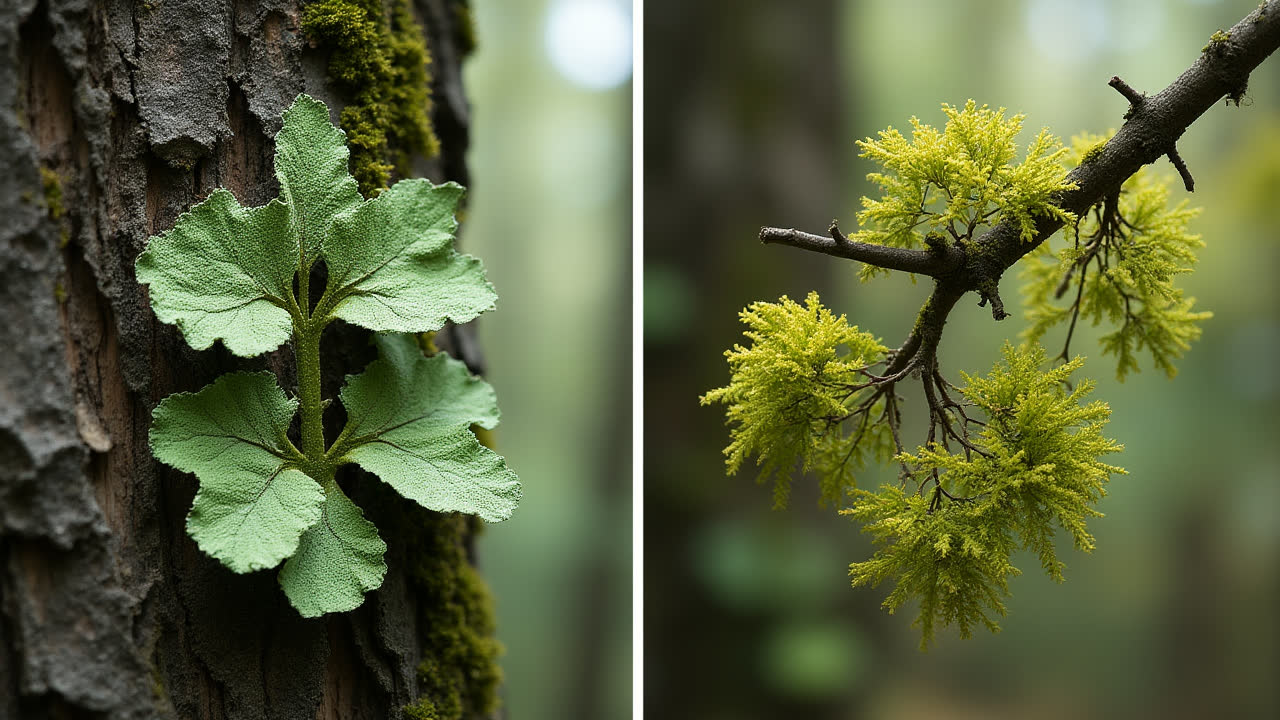
Foliose lichens are among the most recognizable lichen types in nature, characterized by their distinctive leaf-like appearance. The name "foliose" comes from the Latin word "folium," meaning leaf, which perfectly describes their flat, lobed structure. These lichens form broad, horizontally spreading thalli (singular: thallus, the vegetative body) that resemble miniature leaves attached to various surfaces.
The structure of foliose lichens is quite complex and specialized. They feature a layered organization with an upper cortex containing photosynthetic cells, a medulla that makes up the bulk of the thallus and allows for gas exchange, and a lower cortex with specialized hyphae called rhizines that attach the lichen to its substrate. This sophisticated structure enables foliose lichens to maximize photosynthetic activity while maintaining a secure attachment to their growing surface.
One of the remarkable aspects of foliose lichens is their extremely slow growth rate—typically only 0.01 to 0.27 mm per year. This glacial pace means that large foliose lichens you might spot in forests could be several decades old, with typical lifespans ranging from 30 to 60 years. Common examples of foliose lichens include Physica, Parmelia, and Peltigera species, which you might recognize as the gray-green or yellowish patches on tree trunks or rocks in relatively unpolluted areas.
Fruticose Lichen: Branching Wonders of the Lichen World
Fruticose lichens stand out in the lichen world with their distinctive three-dimensional, shrubby appearance. Unlike their flattened foliose cousins, fruticose lichens grow upward or hang downward in branching structures that sometimes resemble tiny bushes, corals, or even beards. This unique growth habit gives them their name, derived from the Latin "fruticosus," meaning shrubby.
The structure of fruticose lichens is adapted for their upright or hanging growth pattern. They typically have a cylindrical or slightly flattened thallus with branches that radiate from a central point. These lichens attach to their substrate via a specialized structure called a holdfast rather than the rhizines seen in foliose lichens. This structural adaptation allows fruticose lichens to maximize surface area exposure to air and light while maintaining a relatively small attachment footprint.
Fruticose lichens demonstrate remarkable adaptability to environmental conditions. They can withstand high degrees of desiccation (drying out) and quickly rehydrate when moisture becomes available. This adaptability makes them successful colonizers of various habitats, including tree canopies, exposed rock surfaces, and even soil in some cases. Notable examples of fruticose lichens include Evernia, Cladonia (including the famous "reindeer lichens"), and Usnea (commonly known as "old man's beard" due to its hanging, beard-like appearance).
The coloration of fruticose lichens varies widely depending on several factors: the specific type of photobiont (algae or cyanobacteria), the characteristics of the fungal hyphae, various compounds produced by the lichen, and environmental factors like light exposure and moisture availability. This diversity contributes to the vibrant splashes of color these lichens add to natural landscapes.
Similarities Between Foliose and Fruticose Lichens
Despite their structural differences, foliose and fruticose lichens share several important characteristics that define them as lichens. Both are examples of successful symbiotic relationships that have stood the test of time—lichens as a group have existed for approximately 400 million years, making them some of Earth's most ancient and resilient life forms.
Both types represent a remarkable partnership between fungi (typically ascomycetes) and photosynthetic partners (either green algae or cyanobacteria). This symbiotic relationship benefits both organisms: the fungal partner provides protection, water, and mineral nutrients, while the photobiont supplies carbohydrates through photosynthesis. This mutually beneficial arrangement allows lichens to colonize harsh environments where neither partner could survive independently.
Additionally, both foliose and fruticose lichens share habitat preferences and ecological roles. They thrive in environments with clean air and adequate moisture, making them excellent bioindicators of air quality. Both can be terricolous (growing on soil), corticolous (growing on bark), or saxicolous (growing on rock surfaces). They play crucial ecological roles in soil formation, nutrient cycling, and providing food and shelter for various small organisms.
Foliose vs Fruticose Lichen: Comprehensive Comparison
| Comparison Point | Foliose Lichen | Fruticose Lichen |
|---|---|---|
| Growth Form | Flat, leaf-like, horizontal growth | Shrubby, branched, upright or hanging growth |
| Attachment Structure | Rhizines (root-like structures) | Holdfast (disc-like structure) |
| Surface Area | Two-dimensional, maximizes horizontal coverage | Three-dimensional, maximizes vertical exposure |
| Thallus Structure | Dorsiventral (distinct upper and lower surfaces) | Radial (similar on all sides) |
| Examples | Physica, Parmelia, Peltigera | Evernia, Cladonia, Usnea |
| Typical Habitats | Tree trunks, horizontal rock surfaces | Tree branches, vertical surfaces, soil |
| Moisture Retention | Moderate | Higher (due to three-dimensional structure) |
| Visual Identification | Appears as flat patches with lobed edges | Appears as miniature shrubs or hanging "beards" |
Ecological Importance of Lichens
Both foliose and fruticose lichens play crucial roles in ecosystems worldwide. As pioneer species, they're often the first organisms to colonize bare rock, initiating the soil formation process. Through physical and chemical weathering, lichens break down rock surfaces and create microhabitats where other organisms can eventually establish.
Lichens also serve as important food sources for various animals. Reindeer and caribou in northern regions rely heavily on fruticose "reindeer lichens" for winter sustenance. Numerous insects, snails, and other invertebrates feed on or make homes in lichen thalli. Even birds utilize lichens as nesting materials, with some species specifically selecting certain lichen types for camouflage.
Perhaps one of the most valuable ecological roles lichens play is as bioindicators of environmental health. Their sensitivity to air pollution, particularly sulfur dioxide and nitrogen oxides, makes them natural monitors of air quality. Areas with abundant and diverse lichen communities generally indicate clean air, while polluted regions show reduced lichen diversity and abundance. This characteristic makes lichens invaluable in environmental monitoring programs worldwide.
I've noticed that in my own neighborhood, lichen diversity has changed over the years. When I first moved here, there were barely any lichens visible on trees. Now, after improved air quality regulations have been implemented, I'm seeing a gradual return of both foliose and fruticose lichens—nature's own testimony to environmental improvement.
Frequently Asked Questions About Foliose and Fruticose Lichens
How can I distinguish between foliose and fruticose lichens in the field?
The easiest way to distinguish between foliose and fruticose lichens is by their growth form. Foliose lichens grow flat against surfaces like leaves, with distinct upper and lower surfaces. They'll appear as flat, often circular patches with lobed edges. Fruticose lichens, on the other hand, grow upright or hang down in branching structures that resemble tiny shrubs or beards. If you can gently lift the edge of the lichen away from its substrate, it's likely foliose. If it's growing upward or hanging down in branches, it's fruticose.
Are lichens harmful to trees or structures they grow on?
Lichens are generally not harmful to the trees or structures they grow on. They're not parasitic and don't extract nutrients from tree tissues. Instead, they use trees and other surfaces merely as a substrate to grow on. Lichens attach superficially to the bark or outer surfaces without penetrating living tissues. In fact, abundant lichen growth on trees is typically a sign of good air quality. However, in rare cases, very heavy lichen growth might obstruct light or trap excessive moisture against surfaces, potentially causing minor issues over time.
Can lichens be used for human purposes?
Yes, lichens have been used by humans for various purposes throughout history. Some species have been used as natural dyes for fabrics, producing colors ranging from browns and yellows to purples and reds. Certain lichens have traditional medicinal uses, with compounds like usnic acid showing antibacterial properties. In perfumery, "oak moss" (actually a lichen) has been used as a fixative. Some North American Indigenous peoples used lichens for food in times of scarcity, though most lichens require special preparation to be edible. Modern research continues to explore lichens for potential pharmaceutical compounds and as biomonitors for environmental pollution.
Conclusion
The difference between foliose and fruticose lichens extends beyond mere morphology—it represents nature's diverse solutions to environmental challenges. Foliose lichens, with their leaf-like structure and horizontal growth pattern, excel at maximizing photosynthetic surface area while maintaining close contact with their substrate. Fruticose lichens, with their branching, three-dimensional forms, capitalize on vertical space and increased surface area for gas exchange and light capture.
Both lichen types exemplify the remarkable adaptability of symbiotic relationships in nature. They've conquered some of Earth's harshest environments, from arctic tundra to scorching deserts, and continue to play vital ecological roles in nutrient cycling, soil formation, and as sensitive indicators of environmental health.
Next time you're outdoors, take a moment to look closely at the lichens around you. Are they flat and leaf-like, or bushy and branched? That simple observation is your first step into the fascinating world of lichen identification and appreciation. These ancient organisms, often overlooked, have much to teach us about resilience, symbiosis, and the intricate web of life that surrounds us every day.