Knit vs Purl: Understanding the Essential Differences in Knitting
Knit vs Purl: Understanding the Essential Differences in Knitting
Introduction to Knit and Purl Stitches
If you've ever picked up knitting needles, you've likely encountered the two most fundamental stitches in the craft: knit and purl. These two basic techniques form the foundation of virtually every knitting pattern in existence, from simple scarves to intricate sweaters. Understanding the difference between knit and purl is essential for anyone looking to advance their knitting skills.
When I first learned to knit, I remember being confused about how two seemingly simple stitches could create such varied and complex fabrics. But that's the magic of knitting! The relationship between knit and purl stitches is like that of yin and yang – they're opposite yet complementary, creating balance and texture in your knitted fabric.
In this comprehensive guide, we'll explore everything you need to know about these fundamental stitches. We'll examine how they're formed, their unique characteristics, and the versatile ways they can be combined to create different patterns and textures. Whether you're a complete beginner or looking to refresh your understanding, this article will help you master the essential knit and purl stitches.
What Is a Knit Stitch?
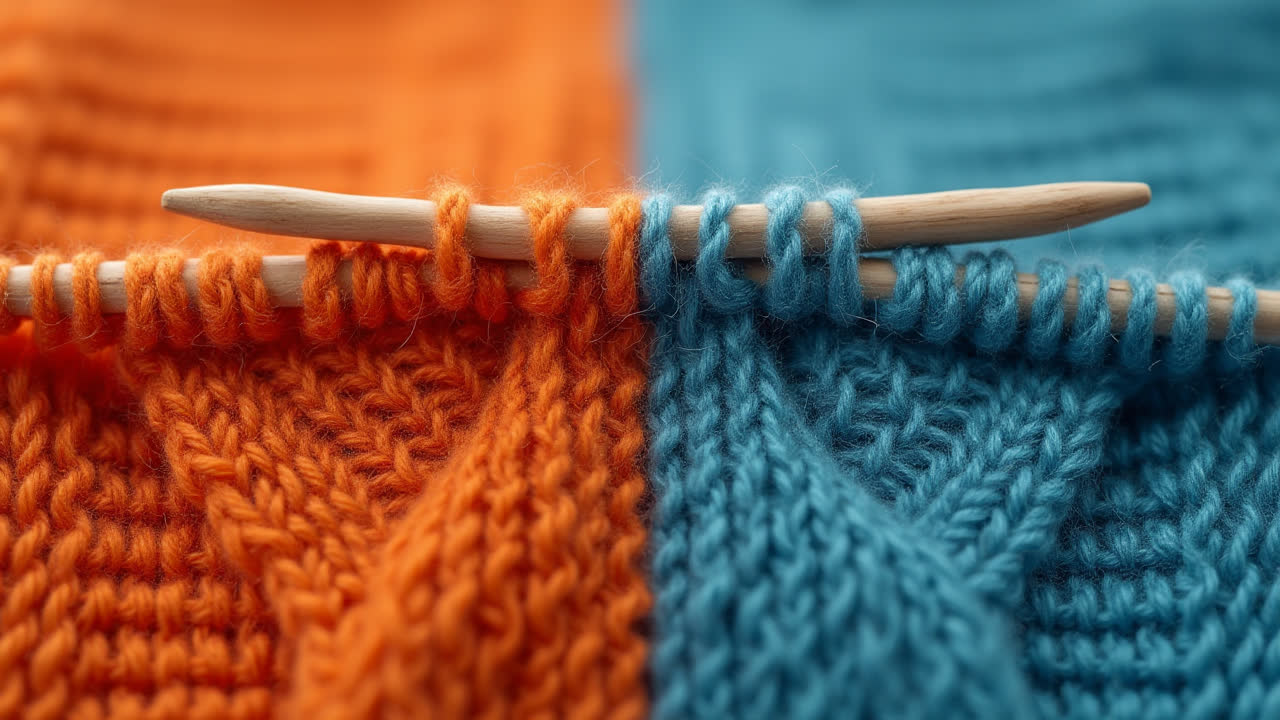
The knit stitch is typically the first technique that beginners learn when they start knitting. Often called the "plain stitch," it creates the smooth, V-shaped pattern that most people associate with knitted fabrics. When you look at a piece of knitting and see rows of little V's stacked on top of each other, you're looking at knit stitches.
Creating a knit stitch involves working with the yarn positioned at the back of your work. You insert the right-hand needle from front to back through the first stitch on the left-hand needle. Then, you wrap the yarn counterclockwise around the right needle, draw this new loop through the original stitch, and slip the old stitch off the left needle. This process leaves you with one stitch transferred from the left needle to the right.
The distinctive V-shape of knit stitches makes them particularly recognizable in knitted fabric. When you run your hand over a surface of knit stitches, it feels relatively smooth and flat. The knit stitch is the "public" face of traditional knitting – it's the side that's typically shown on the outside of garments like sweaters.
I've spent countless hours practicing my knit stitches, and I've found that maintaining consistent tension is the key to creating even, beautiful work. When your knit stitches are uniform, they create a fabric that drapes nicely and has a professional appearance. Too tight, and your fabric becomes stiff; too loose, and it lacks structure. Finding that perfect middle ground takes practice, but it's well worth the effort!
What Is a Purl Stitch?
The purl stitch is the second basic technique that knitters learn after mastering the knit stitch. While knit stitches create V-shaped patterns, purl stitches form horizontal ridges or "bumps" across the fabric. Interestingly, a purl stitch is essentially the mirror image or reverse side of a knit stitch – a fact that fascinated me when I first discovered it!
To create a purl stitch, you work with the yarn positioned at the front of your work (unlike the knit stitch, where the yarn stays at the back). You insert the right-hand needle from back to front through the first stitch on the left-hand needle. Then, you wrap the yarn counterclockwise around the right needle, draw this new loop back through the original stitch, and slip the old stitch off the left needle.
The resulting texture of purl stitches is quite different from knit stitches. Instead of a smooth surface with V-shapes, purls create a bumpy, textured fabric with horizontal ridges. These ridges add dimension and interest to knitted pieces. When you run your fingers across a surface of purl stitches, you can feel these distinctive bumps.
Many beginners find purl stitches slightly more challenging to master than knit stitches. I remember struggling with my tension when learning to purl – it's common for new knitters to create purl stitches that are either too tight or too loose compared to their knit stitches. With practice, though, you'll develop the muscle memory to create consistent, beautiful purl stitches that work harmoniously with your knit stitches.
The Relationship Between Knit and Purl
One of the most fascinating aspects of knitting is the mirroring relationship between knit and purl stitches. They are two sides of the same coin – quite literally! If you look at the back side of a knit stitch, what do you see? A purl bump. And if you flip over fabric with purl stitches on the front, you'll find knit V's on the back. This relationship creates endless possibilities for creating texture and pattern in your knitting.
Understanding this complementary relationship is crucial for reading your knitting – a skill that elevates you from beginner to intermediate knitter. When you can "read" your knitting, you can identify which stitches you've made, spot mistakes more easily, and understand how different stitch patterns are constructed. I can't count how many times this skill has saved me from frustration when I've lost track of where I am in a pattern!
This mirroring quality also means that any pattern can be worked from either side by simply substituting knits for purls and vice versa. For example, if a pattern calls for knitting on right-side rows and purling on wrong-side rows, you're creating what's known as stockinette stitch – smooth on one side, bumpy on the other. Reverse this (purl on right-side rows, knit on wrong-side rows), and you get reverse stockinette – bumpy on the front, smooth on the back.
The interplay between these two basic stitches forms the building blocks for all knitting patterns. From the simplest garter stitch (knitting every row) to complex cables and textured designs, everything in knitting derives from different arrangements of knits and purls. This simplicity is what makes knitting so accessible to beginners, yet so infinitely variable for advanced crafters.
Key Differences Between Knit and Purl Stitches
While knit and purl stitches are two sides of the same coin, they have distinct characteristics that set them apart. Understanding these differences is essential for creating the exact fabric and texture you want in your knitting projects. Let's break down the key differences between these fundamental stitches:
Working Direction
The most basic difference lies in how the stitches are formed. With a knit stitch, you insert the needle from front to back, while with a purl stitch, you insert the needle from back to front. This opposite motion creates the mirroring effect between the two stitches.
Yarn Position
When making a knit stitch, the working yarn is held at the back of your work. For a purl stitch, the yarn is held at the front. This difference in yarn positioning is crucial – if you accidentally hold your yarn in the wrong position, you'll create the opposite stitch from what you intended!
Visual Appearance
Knit stitches create V-shaped patterns that stack horizontally across your fabric. They give a smooth, flat appearance to the knitted surface. Purl stitches, on the other hand, form horizontal bumps or ridges across the fabric, creating a textured surface. These distinctive textures can be used strategically in patterns to create visual interest.
Tactile Differences
Run your hand across a surface of knit stitches, and you'll feel a relatively smooth fabric. Do the same with purl stitches, and you'll feel the distinctive bumps. These tactile differences make certain stitch patterns more suitable for specific projects – for example, the raised texture of purl stitches might be perfect for a winter scarf with extra insulation.
Prominence in Different Patterns
In traditional knitting, knit stitches are often featured on the "public" side of garments, while purl stitches may be relegated to the wrong side. However, contemporary designers frequently highlight purl stitches as decorative elements, creating interesting textural contrasts in their designs.
Common Stitch Patterns Using Knit and Purl
The beauty of knitting lies in how two simple stitches – knit and purl – can be combined in countless ways to create diverse fabrics and textures. Here are some of the most common stitch patterns that rely on different combinations of knits and purls:
Garter Stitch
The simplest stitch pattern involves knitting every row (or purling every row if working in the round). This creates a reversible, corrugated fabric with horizontal ridges on both sides. Garter stitch lies flat and doesn't curl, making it ideal for beginners and for items like scarves where both sides will be visible.
Stockinette Stitch
Perhaps the most classic knitting pattern, stockinette is created by alternating rows: knit on right-side rows and purl on wrong-side rows. The result is a smooth, V-patterned surface on one side (the knit side) and a bumpy, ridged surface on the other (the purl side). Stockinette has a tendency to curl at the edges, so it's often bordered with non-curling patterns like garter stitch.
Reverse Stockinette
As the name suggests, this is the opposite of stockinette: purl on right-side rows and knit on wrong-side rows. This puts the bumpy, textured side of the fabric on display as the "right" side. It's frequently used for decorative elements or to create contrast within a piece.
Seed Stitch
This pattern alternates knit and purl stitches within each row and from row to row, creating a nubbly, textured fabric that resembles scattered seeds. Typically, you knit the purl stitches and purl the knit stitches from the previous row. Seed stitch is reversible and doesn't curl, making it excellent for scarves, blankets, and borders.
Moss Stitch
Similar to seed stitch, moss stitch creates a textured, non-curling fabric. The difference lies in how the pattern repeats: in moss stitch, you work the same pattern for two rows before switching. This creates a slightly different textural effect than seed stitch, with a more pronounced "mossy" appearance.
Ribbing
Various ribbing patterns (1x1, 2x2, etc.) alternate knit and purl stitches in the same row, creating vertical columns of each stitch type. Ribbing is stretchy and elastic, making it perfect for cuffs, collars, and waistbands. The numbers refer to how many knit and purl stitches appear in sequence – for example, 2x2 ribbing has two knit stitches followed by two purl stitches.
Basket Weave
This pattern creates a textured surface resembling a woven basket by working blocks of knit and purl stitches. Typically, you'll work several rows with a specific pattern of knits and purls, then switch the pattern for the next set of rows, creating a checkerboard effect of raised and recessed squares.
Comparative Analysis: Knit vs Purl Stitches
| Feature | Knit Stitch | Purl Stitch |
|---|---|---|
| Working Direction | Needle inserted from front to back | Needle inserted from back to front |
| Yarn Position | Held at the back of work | Held at the front of work |
| Visual Appearance | V-shaped stitches | Horizontal bumps or ridges |
| Texture | Smooth, flat surface | Bumpy, textured surface |
| Typical Usage | Often used for the "public" side of garments | Traditionally used for wrong side, now also featured decoratively |
| Ease of Learning | Usually easier for beginners | Often more challenging to master initially |
| Stitch Abbreviation | K | P |
| Mirroring | Back side appears as purl bumps | Back side appears as knit V's |
Tips for Mastering Knit and Purl Stitches
After years of teaching knitting classes, I've gathered some practical tips to help knitters of all levels perfect their knit and purl techniques:
For Beginners
- Start with larger needles and light-colored, medium-weight yarn. This makes it easier to see your stitches and work with them.
- Practice both stitches separately before combining them. Master the knit stitch first, then move on to purl, then try patterns that combine both.
- Watch your tension. Beginners often pull too tightly when learning new stitches. Remember that stitches need to slide easily on your needles.
- Count your stitches regularly. This helps you catch mistakes early before they become major problems.
- Use stitch markers. These can help you keep track of pattern repeats when you start combining knits and purls.
For Improving Technique
- Pay attention to your yarn position. Accidentally holding your yarn in the front when you mean to knit (or in the back when you mean to purl) is a common mistake.
- Work on maintaining consistent tension across both stitch types. Many knitters find their purl stitches are looser or tighter than their knit stitches.
- Learn to "read" your knitting. Being able to identify knit and purl stitches in your work helps you spot errors and understand patterns better.
- Try different knitting styles. English (yarn held in right hand) and Continental (yarn held in left hand) styles feel different for knit and purl stitches. One might feel more natural to you.
- Practice transitioning between knit and purl within a row. Moving the yarn from front to back (or vice versa) smoothly takes practice.
Pro Tip:
If you find purling particularly challenging, try "Norwegian purling" – a technique where the yarn is held at the back (like for knitting) but still creates a purl stitch. Many knitters find this method more comfortable and efficient, especially when working patterns with frequent knit-to-purl transitions.
Frequently Asked Questions About Knit and Purl Stitches
Which is easier, knit or purl stitch?
Most beginners find the knit stitch easier to learn and execute than the purl stitch. The knit stitch involves a more natural hand movement and keeping the yarn in a consistent position at the back of the work. Purl stitches require moving the yarn to the front and inserting the needle in the opposite direction, which can feel awkward at first. However, with practice, many knitters find that purling becomes just as comfortable as knitting. If you're struggling with purling, try watching video tutorials that focus specifically on the purl technique or consider learning Continental knitting, which some find makes purling easier.
Why does my knitting look different on each side?
If you're knitting every row (or purling every row), your work should look relatively similar on both sides – this is called garter stitch. However, if you're knitting on one side and purling on the other (stockinette stitch), you'll see a dramatic difference: one side will show smooth V's (the knit side) while the other will show bumpy ridges (the purl side). This difference occurs because knit and purl are opposite stitches – the back of a knit stitch looks like a purl, and vice versa. Most knitting patterns take advantage of this characteristic to create specific textures and effects. If you want your work to look identical on both sides, stick with reversible patterns like garter stitch, seed stitch, or ribbing.
Why does my stockinette stitch curl at the edges?
Stockinette stitch (knitting one row, purling the next) naturally curls at the edges because of the physical structure of the stitches. Knit stitches are slightly shorter and wider than purl stitches, which creates tension in the fabric. This difference causes the edges to curl toward the purl side of the work – the bottom and top edges curl toward the back, while the side edges curl toward the front. To prevent curling, you can add a border of non-curling stitch patterns like garter stitch, seed stitch, or ribbing. Another option is to block your finished piece, which can help minimize curling. For projects like scarves where both sides are visible, consider using entirely non-curling patterns instead of stockinette.
Conclusion: The Beauty of Knit and Purl Harmony
The magic of knitting truly lies in the harmonious relationship between knit and purl stitches. These two fundamental techniques, while opposite in execution, work together to create endless possibilities in texture, pattern, and design. Understanding the differences between knit and purl stitches – from how they're formed to how they look and feel – is essential for every knitter who wants to expand their skills.
Remember that mastering these basic stitches takes practice. Don't be discouraged if your early attempts at purling feel awkward or if your tension varies between knit and purl rows. Every experienced knitter started as a beginner, and developing muscle memory for these techniques simply takes time. Be patient with yourself, and soon enough, your hands will flow naturally between knits and purls.
As you continue your knitting journey, experiment with different combinations of these stitches to discover the incredible variety of fabrics you can create. From the simple elegance of stockinette to the textural interest of seed stitch, from the stretchiness of ribbing to the complexity of more advanced patterns – all of these possibilities stem from just two basic stitches.
Isn't it remarkable that something so simple can create such complexity? That's what I love most about knitting – it's accessible enough for beginners to pick up quickly, yet offers endless depth for those who want to explore further. So pick up those needles, practice your knits and purls, and watch as beautiful fabric grows right before your eyes, one stitch at a time.