Normal vs Anomalous Dispersion: Understanding Light Behavior in Materials
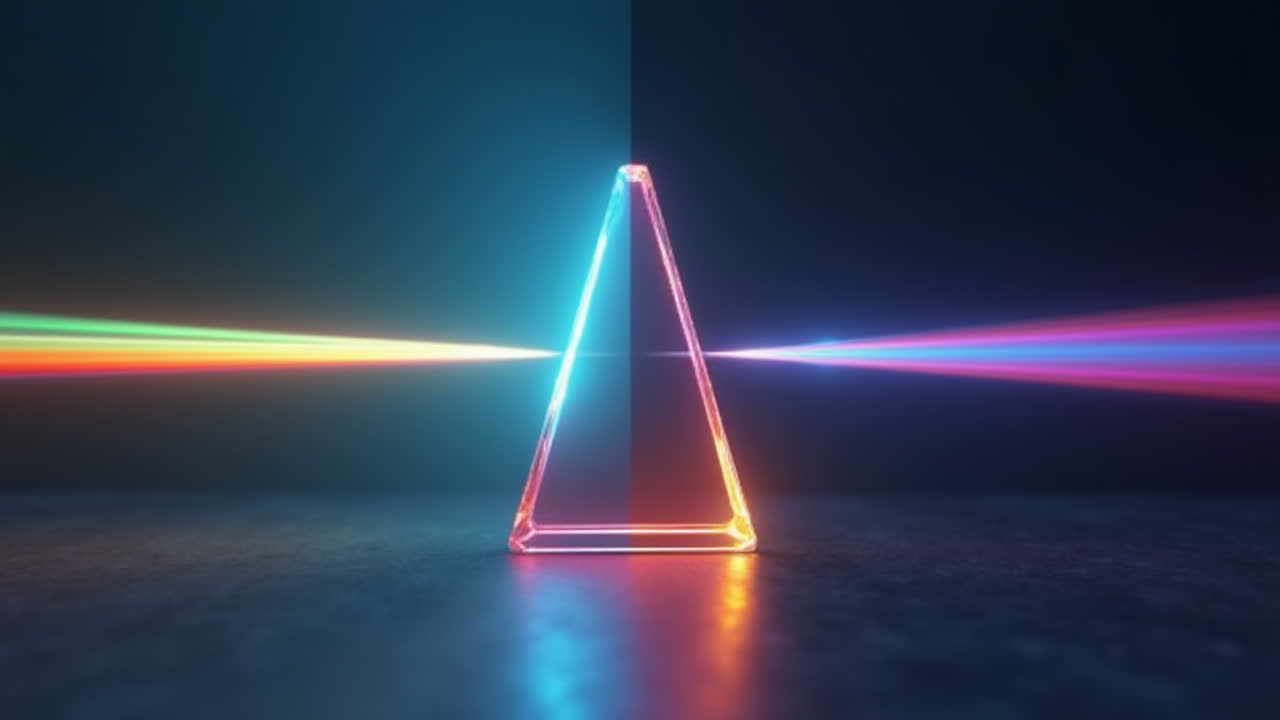
Have you ever wondered why a rainbow forms after a rain shower or why a prism splits white light into a spectrum of colors? The secret lies in a fascinating optical phenomenon called dispersion. When we explore the intricate dance between light and matter, we discover two primary types of dispersion: normal and anomalous. These phenomena explain how different wavelengths of light travel through various materials and why we see certain optical effects in our everyday lives.
I've always been captivated by the way light behaves when passing through different substances. Just last week, I was showing my nephew how a simple glass of water can bend a beam of light from his flashlight. His eyes lit up with wonder, reminding me how magical these basic principles of physics can appear. This experience inspired me to dive deeper into explaining the differences between normal and anomalous dispersion in a way that's both scientifically accurate and accessible.
In this comprehensive guide, we'll unravel the mysteries of how light waves interact with matter, exploring the key differences between normal and anomalous dispersion. We'll also examine real-world applications, from the colorful displays in our everyday experiences to cutting-edge technologies that leverage these optical principles. Whether you're a student, educator, or simply curious about the physics behind light behavior, this article will illuminate the subject in clear, understandable terms.
What is Normal Dispersion?
Normal dispersion occurs when light waves of different wavelengths travel at different speeds through a transparent medium. In this common phenomenon, shorter wavelengths (such as blue and violet light) travel more slowly through the material than longer wavelengths (like red and orange light). This happens because the refractive index of most materials varies with the wavelength of light passing through them.
Think of it this way: when light waves enter a denser medium, they slow down due to interactions with the atoms in the material. These interactions are stronger for higher-frequency waves (shorter wavelengths), causing them to slow down more significantly. This differential slowing creates the beautiful spread of colors we see in rainbows and when light passes through prisms.
Most transparent materials we encounter daily—like glass, water, and clear plastics—exhibit normal dispersion across the visible light spectrum. When white light passes through these materials, it separates into its component colors because each wavelength travels at a different speed and bends at a different angle. The refractive index in normal dispersion decreases as the wavelength increases, which is why violet light (shorter wavelength) bends more than red light (longer wavelength) when passing through a prism.
I remember conducting a simple experiment in my kitchen using a glass of water and a piece of paper with a straight line drawn on it. When viewed through the water, the line appeared bent due to refraction. But what fascinated me was realizing that if I had used different colored lines, each would have bent slightly differently—a perfect demonstration of normal dispersion in action!
What is Anomalous Dispersion?
Unlike its more common counterpart, anomalous dispersion presents a fascinating reversal of the expected behavior of light. In this less common phenomenon, longer wavelengths actually travel more slowly through the material than shorter wavelengths—essentially the opposite of normal dispersion. This unusual behavior occurs in specific circumstances, particularly near absorption bands of a material.
During anomalous dispersion, the refractive index increases with increasing wavelength, contrary to what happens in normal dispersion. This reversed relationship creates unique optical effects that can be harnessed for specialized applications. While we don't encounter anomalous dispersion as frequently in everyday life, it plays a crucial role in advanced optical technologies and scientific research.
What causes this reversal? Anomalous dispersion typically occurs when light frequencies are close to the resonant frequencies of atoms or molecules in the material. Near these resonance points, the material strongly absorbs certain wavelengths, dramatically altering how neighboring wavelengths propagate through the medium. This results in unusual dispersion patterns that defy our everyday experience with light.
The first time I witnessed anomalous dispersion was during a university laboratory demonstration. Our professor used a specialized glass with metal ions that created strong absorption bands. The resulting dispersion pattern completely contradicted what we expected to see based on our previous experiments with normal dispersion. That moment of scientific surprise—when nature defies your expectations—is what makes physics so endlessly fascinating to me.
Key Differences Between Normal and Anomalous Dispersion
Understanding the distinctions between normal and anomalous dispersion helps us grasp the full spectrum of light behavior in different materials. Let's explore these differences in detail through a comparative analysis:
| Characteristic | Normal Dispersion | Anomalous Dispersion |
|---|---|---|
| Wavelength Behavior | Shorter wavelengths travel slower than longer wavelengths | Longer wavelengths travel slower than shorter wavelengths |
| Refractive Index Pattern | Refractive index decreases as wavelength increases | Refractive index increases as wavelength increases |
| Light Bending | Shorter wavelengths (blue/violet) bend more | Longer wavelengths (red/orange) bend more |
| Common Occurrence | Most transparent materials in visible spectrum | Near absorption bands or with specialized materials |
| Frequency Dependence | Higher frequencies experience greater slowing | Lower frequencies experience greater slowing |
| Visible Example | Rainbow formation (violet on inside, red on outside) | Specialized optical filters and certain vapor conditions |
| Material Examples | Glass, water, most crystals in visible light | Metals in certain frequency ranges, some gases near absorption lines |
| Primary Applications | Prisms, lenses, spectroscopy, fiber optics | Specialized filters, pulse compression, advanced sensing |
Practical Applications and Real-World Examples
Applications of Normal Dispersion
Normal dispersion finds applications in numerous optical devices and scientific instruments that we rely on daily. One of the most fundamental uses is in spectroscopy, where scientists analyze the composition of materials by examining how they interact with different wavelengths of light. By spreading light into its component wavelengths, spectroscopes enable researchers to identify elements and compounds based on their unique spectral signatures.
Another vital application is in optical communications. Though normal dispersion can sometimes be a challenge in fiber optic systems (causing signal degradation over long distances), engineers have developed clever ways to manage and even utilize dispersion to improve data transmission. Some specialized fibers are designed with specific dispersion profiles to enhance performance for particular applications.
We also see normal dispersion at work in everyday optical instruments like cameras and telescopes. The lenses in these devices must be carefully designed to correct for dispersion effects (known as chromatic aberration) that would otherwise result in colored fringes around images. Achromatic lenses, which combine elements with different dispersion properties, help produce clearer images by bringing different wavelengths to the same focal point.
Applications of Anomalous Dispersion
Though less common, anomalous dispersion enables some fascinating technological applications. In pulse compression, the unusual dispersion properties of certain materials allow scientists to create extremely short laser pulses—essential for studying ultrafast processes in physics, chemistry, and biology. These pulses can be as brief as a few femtoseconds (10-15 seconds), providing a glimpse into molecular and atomic events that were once impossible to observe.
Anomalous dispersion also plays a crucial role in the development of highly selective optical filters. These specialized filters can isolate very specific wavelengths of light with remarkable precision, making them invaluable for applications like chemical sensing, medical imaging, and telecommunications. The unique way that anomalous dispersion materials interact with light allows for filtering capabilities that would be difficult to achieve through other means.
In atmospheric remote sensing, scientists leverage the anomalous dispersion properties of certain gases to analyze the composition of planetary atmospheres. By studying how light interacts with these gases, researchers can detect the presence of specific compounds and measure their concentrations—a technique that has been vital in understanding Earth's atmosphere as well as those of other planets in our solar system.
Similarities Between Normal and Anomalous Dispersion
Despite their differences, normal and anomalous dispersion share important underlying physical principles. After all, both phenomena arise from the fundamental interactions between electromagnetic waves (light) and matter. Both types of dispersion occur due to the relationship between a material's refractive index and the wavelength of incident light—it's the nature of this relationship that differs between the two.
In both normal and anomalous dispersion, we see that light waves of different wavelengths travel at different speeds through the material. This differential speed is what causes the separation of colors and the bending of light rays. Additionally, both phenomena are directly related to the atomic and molecular structure of the material, reflecting how electrons within the material respond to the oscillating electric field of the light wave.
Another similarity is that both types of dispersion can be mathematically described using the same fundamental equations of electromagnetism, particularly Maxwell's equations and the resulting wave equations. The difference lies in the specific values and trends of the parameters involved, not in the underlying physical laws governing the behavior.
Both normal and anomalous dispersion find practical applications in optical devices and scientific instruments, though often for different purposes. Engineers and scientists can harness either type of dispersion depending on the specific requirements of their application, whether they need the predictable behavior of normal dispersion or the unique properties of anomalous dispersion for specialized tasks.
Frequently Asked Questions About Dispersion
How does dispersion affect fiber optic communications?
Dispersion in fiber optics can cause signal degradation and limit transmission rates. As light pulses travel through optical fibers, different wavelengths move at different speeds due to material dispersion. This causes pulses to spread out over distance, potentially overlapping and creating errors in data transmission. To counter this, modern fiber optic systems use dispersion-shifted fibers, dispersion-compensating modules, or wavelength division multiplexing (WDM) techniques. Some advanced systems even exploit controlled anomalous dispersion regions to create soliton pulses that can maintain their shape over long distances, enabling higher data rates and longer transmission distances without signal regeneration.
Why does a rainbow show colors in a specific order?
Rainbows display colors in a consistent order (red on the outside, violet on the inside) due to normal dispersion in water droplets. When sunlight enters a raindrop, it undergoes refraction, with different wavelengths bending at different angles. Violet light (shorter wavelength) bends more than red light (longer wavelength), creating the characteristic color separation. The light then reflects off the back of the droplet and refracts again when exiting, further enhancing the separation. This process happens in countless raindrops simultaneously, with each droplet contributing just one color to the observer from its particular position. The consistent ordering is a direct result of how normal dispersion affects light waves of different wavelengths in water, creating one of nature's most beautiful displays of optical physics.
Can materials exhibit both normal and anomalous dispersion?
Yes, the same material can exhibit both normal and anomalous dispersion depending on the wavelength range being considered. Materials typically show normal dispersion across most of the spectrum but transition to anomalous dispersion near absorption bands. These absorption bands occur at specific wavelengths where the material strongly interacts with light, causing dramatic changes in the refractive index. For example, glass shows normal dispersion throughout the visible spectrum but may show anomalous dispersion in the ultraviolet or infrared regions near its absorption bands. This wavelength-dependent behavior is described by the Kramers-Kronig relations in physics, which mathematically connect a material's absorption properties to its dispersion characteristics. The ability of materials to showcase both behaviors makes them versatile for various optical applications, from simple lenses to complex photonic devices.
Conclusion: The Broader Significance of Understanding Dispersion
The study of normal and anomalous dispersion extends far beyond academic interest—it forms the foundation for countless technologies that shape our modern world. From the glasses that correct our vision to the fiber optic networks that power the internet, dispersion phenomena influence how we see and communicate.
As we've explored throughout this article, the key difference between normal and anomalous dispersion lies in how wavelengths of light travel through materials. In normal dispersion, shorter wavelengths travel more slowly, while in anomalous dispersion, the opposite occurs. This seemingly simple distinction leads to profound differences in optical behavior and applications.
Understanding these principles enables engineers and scientists to design better optical systems, develop more efficient communications networks, and create more powerful analytical tools. The controlled manipulation of dispersion has opened doors to technologies that would have seemed impossible just decades ago.
I'm continually amazed by how fundamental physical principles like dispersion can be harnessed in such diverse and creative ways. Whether you're admiring a rainbow after a summer storm or using a high-speed internet connection, you're experiencing the effects of dispersion in action. Isn't it remarkable how the basic interactions between light and matter can lead to such complex and useful technologies?
As our understanding of optics continues to evolve, so too will our ability to harness these phenomena for new applications. The future of photonics, quantum optics, and optical computing all build upon these fundamental principles of how light behaves when traveling through different materials. By appreciating the subtle differences between normal and anomalous dispersion, we gain insight into one of nature's most fascinating and useful phenomena.