Oil Massage vs Thai Massage: Which One Should You Choose?
Have you ever wondered about the difference between oil massage and Thai massage? If you're looking for the perfect massage experience, understanding these two popular techniques is essential. While both offer fantastic relaxation benefits, they're surprisingly different in approach, technique, and overall experience.
Let me walk you through everything you need to know about these two massage styles. Whether you're a massage newbie or someone looking to try something different, this guide will help you decide which treatment is right for you.
What Makes Thai Massage Special?
Thai massage isn't just a massage – it's a journey into ancient healing traditions. Known as "nuat phaen thai" in the Thai language, this practice has roots that stretch back over 2,500 years. When I first experienced a Thai massage, I was honestly taken aback by how different it felt from typical massages.
The most striking difference? You stay fully clothed! That's right, no undressing required. In traditional Thai massage, you'll typically wear loose, comfortable clothing while lying on a padded mat on the floor. The therapist uses their hands, elbows, knees, and even feet to apply pressure and guide you through various stretching positions.
Here's what makes Thai massage unique:
- No oils or lotions are used
- Fully clothed experience
- Performed on floor mats, not massage tables
- Incorporates yoga-like stretches
- Can last up to 2 hours for a full session
The techniques include compressing, stretching, pulling, and rocking movements that might remind you of passive yoga. If you're thinking this sounds more active than your typical massage, you're absolutely right! Thai massage requires more participation from the recipient compared to other massage types.
Understanding Oil Massage
Now, let's talk about oil massage – the massage style most people think of when they book a spa appointment. Oil massage is what many consider the "classic" massage experience, and it's probably the type you've encountered most frequently.
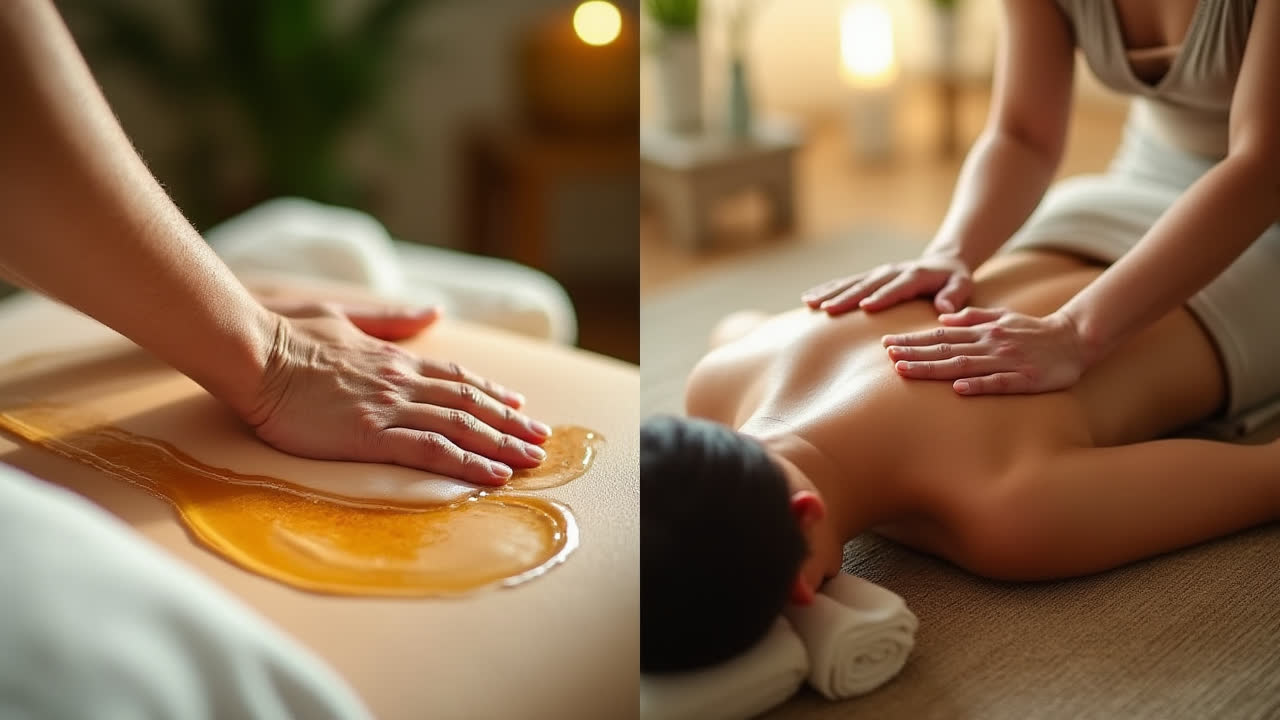
As the name suggests, this technique uses various massage oils to help the therapist's hands glide smoothly over your skin. The oil serves multiple purposes: it reduces friction, moisturizes your skin, and sometimes includes aromatherapy benefits if essential oils are used.
Here's how oil massage typically works:
- Performed on a massage table
- Uses massage oils or lotions
- Often requires partial undressing
- Involves kneading and rubbing motions
- Generally gentler than Thai massage
The techniques in oil massage focus on kneading, circular movements, and gentle pressure to relax muscles and improve circulation. It's a more passive experience where you simply lie down and let the therapist do all the work.
Detailed Comparison: Oil Massage vs Thai Massage
To help you understand these two massage styles better, I've created a detailed comparison table that breaks down all the key differences:
| Comparison Point | Oil Massage | Thai Massage |
|---|---|---|
| Use of Oil/Lotion | Yes, various oils used | No, completely dry massage |
| Clothing Required | Minimal or none | Fully clothed |
| Massage Surface | Massage table | Floor mat |
| Techniques Used | Kneading, rubbing, circular motions | Stretching, compressing, pulling, rocking |
| Intensity Level | Generally gentler | Can be quite intense |
| Recipient Participation | Passive, relaxed | More active involvement |
| Treatment Duration | 30-90 minutes typically | Up to 2 hours for full sessions |
| Origin/Tradition | Various Western/Eastern influences | Traditional Thai/Buddhist medicine |
Health Benefits Comparison
Both massage types offer impressive health benefits, though they work differently to achieve them. Let me share what each can do for your wellbeing.
Thai Massage Benefits
Thai massage is like a full-body workout without the sweat. Here's what you can expect:
- Significantly increased flexibility and range of motion
- Improved circulation through deep pressure techniques
- Enhanced energy levels (great for morning sessions)
- Relief from muscle tension and joint stiffness
- Reduced stress and mental clarity improvement
The combination of acupressure and stretching makes Thai massage particularly effective for athletes and people who spend long hours sitting at desks. I've personally found it fantastic for relieving lower back pain and improving my posture.
Oil Massage Benefits
Oil massage excels at providing deep relaxation and specific muscle relief:
- Deep muscle relaxation and stress reduction
- Improved blood circulation through gentle strokes
- Skin nourishment from massage oils
- Relief from specific muscle knots and tension
- Enhanced mental relaxation and better sleep quality
The gentle nature of oil massage makes it ideal for people who prefer a more soothing experience. It's particularly beneficial if you're looking to unwind after a stressful week.
Which One Should You Choose?
Choosing between oil massage and Thai massage depends on several factors. Here's my honest take on when to choose each:
Choose Thai massage if you:
- Want to improve flexibility and mobility
- Prefer to stay fully clothed
- Enjoy active forms of therapy
- Need relief from chronic muscle tension
- Want an energizing experience
Choose oil massage if you:
- Seek pure relaxation and stress relief
- Prefer gentle, soothing techniques
- Have sensitive skin that would benefit from moisturizing
- Want targeted work on specific muscle groups
- Enjoy aromatherapy benefits
Here's a personal tip: I often alternate between the two. When I need to release deep muscle tension and improve flexibility, I go for Thai massage. When I want to unwind completely and pamper myself, oil massage is my go-to choice.
What to Expect During Your Session
Let me share what you can typically expect from each massage type so you can prepare properly.
Your Thai Massage Experience
When you arrive for a Thai massage, your therapist will likely provide you with loose, comfortable clothing to change into. The session takes place on a thick mat on the floor, and you'll be guided through various positions throughout the treatment.
Don't be surprised if the therapist uses their feet, elbows, or even sits on you – it's all part of the technique! Communication is key here. If any stretch or pressure feels too intense, speak up immediately.
Your Oil Massage Experience
For an oil massage, you'll typically undress to your comfort level (usually leaving underwear on) and lie on a padded table. The therapist will use draping techniques to maintain your privacy throughout the session.
The oil temperature should be warm and comfortable. If you have any skin sensitivities or allergies, be sure to discuss this beforehand. Some places offer different oil options, including aromatherapy blends.
Pricing and Accessibility
In my experience, Thai massage tends to be slightly more expensive due to the specialized training required and the longer session duration. A typical 90-minute Thai massage might cost anywhere from $80-150, while a similar oil massage session could range from $70-130.
However, prices vary significantly based on location, spa reputation, and therapist expertise. Some high-end spas might charge premium rates for both services.
Common Misconceptions
Let me clear up some myths I've heard about these massage types:
Myth 1: Thai massage is always painful. While Thai massage can be intense, it shouldn't be painful. A skilled therapist will work within your comfort zone.
Myth 2: Oil massage is better for relaxation. While oil massage is gentler, many people find Thai massage deeply relaxing in its own way.
Myth 3: You can't get therapeutic benefits from oil massage. Oil massage can be just as therapeutic as Thai massage, especially for specific muscle issues.
Frequently Asked Questions
Can I request a combination of oil massage and Thai massage techniques?
Yes, many massage therapists offer fusion sessions that combine elements of both Thai and oil massage. This can give you the stretching benefits of Thai massage with the gliding strokes and muscle-relaxing effects of oil massage. Just discuss your preferences with your therapist beforehand.
Is Thai massage suitable for people with limited flexibility?
Absolutely! Thai massage can actually help improve flexibility over time. A good therapist will work within your current range of motion and gradually help you become more flexible. They'll modify positions and stretches to accommodate your limitations while still providing therapeutic benefits.
Which massage is better for sports recovery?
For sports recovery, Thai massage often edges out oil massage due to its focus on stretching and deep muscle work. It's excellent for preventing injuries and improving athletic performance. However, oil massage with deep tissue techniques can be equally effective for targeting specific muscle groups that are overworked from sports activities.
Final Thoughts
The choice between oil massage and Thai massage ultimately comes down to your personal preferences, health goals, and what your body needs at any given time. Both offer unique benefits that can significantly improve your wellbeing.
My recommendation? Try both! Many people find that different massage styles serve different purposes in their wellness routine. You might discover that Thai massage is perfect for your monthly deep-tension release, while oil massage is ideal for your weekly relaxation sessions.
Remember, the best massage is the one that makes you feel better. Don't be afraid to communicate with your therapist about what you like or don't like. They're there to help you get the most out of your massage experience.
Whether you choose the ancient stretching traditions of Thai massage or the soothing, gentle approach of oil massage, you're taking a positive step toward better health and relaxation. Happy massaging!