SYBR Green vs Taqman: Understanding Key Differences in PCR Detection
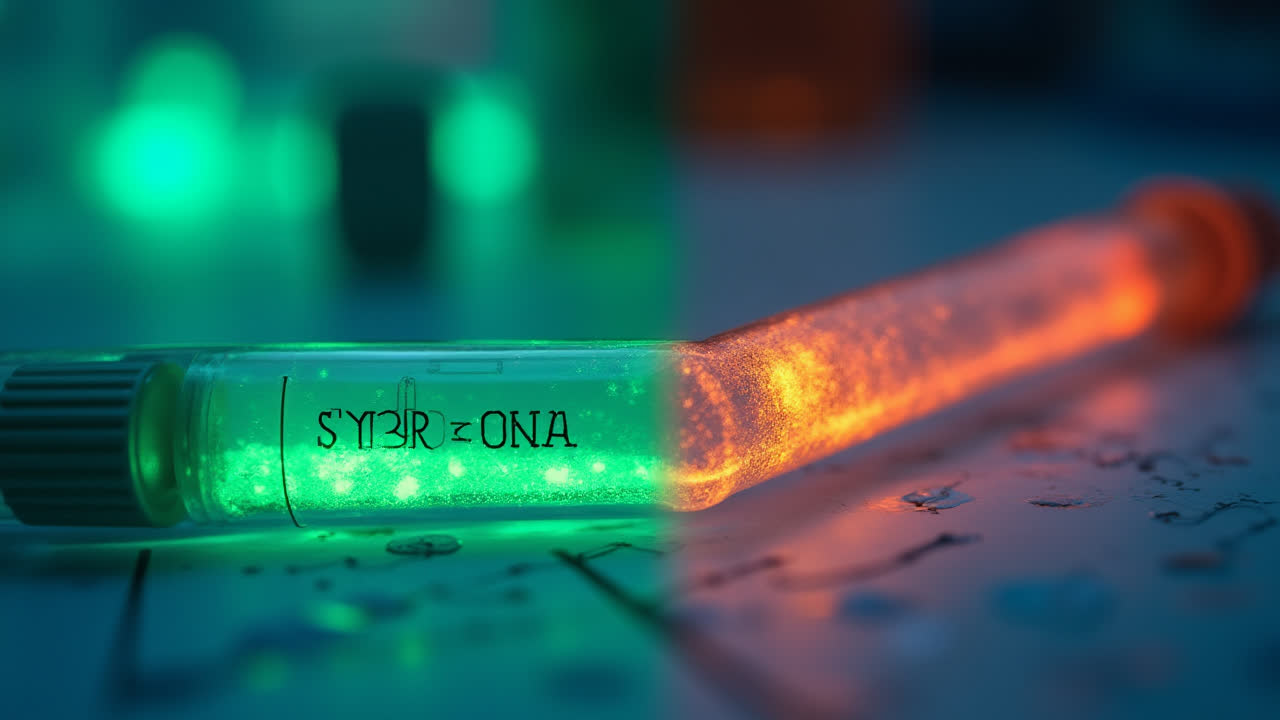
When it comes to real-time PCR techniques, researchers often find themselves deciding between SYBR Green and Taqman detection methods. These two chemistries represent fundamentally different approaches to monitoring DNA amplification during PCR reactions. But how exactly do they differ, and which one might be better suited for your research? Let's dive into this molecular biology debate that affects countless labs worldwide.
Real-time PCR (also known as quantitative PCR or qPCR) has revolutionized how we detect and quantify nucleic acids. Unlike conventional PCR, which only allows endpoint analysis, real-time PCR enables scientists to monitor the amplification of DNA as it happens – cycle by cycle. This remarkable capability depends entirely on detection chemistry, and that's where our two contenders come in.
I've personally used both methods in my research career, and I can tell you that choosing between them isn't always straightforward. There are trade-offs involving specificity, cost, flexibility, and technical complexity that need careful consideration. Have you ever wondered why some labs seem devoted to one method while others swear by the alternative? The answer lies in understanding what makes each approach unique.
What is SYBR Green?
SYBR Green is an asymmetrical cyanine dye that binds to double-stranded DNA (dsDNA). It serves as a versatile nucleic acid stain in molecular biology applications. When free in solution, SYBR Green exhibits relatively little fluorescence, but when it binds to the minor groove of double-stranded DNA, its fluorescence increases dramatically – up to 1000-fold! This property makes it incredibly useful for detecting PCR products as they accumulate during amplification cycles.
The mechanism is beautifully simple. As PCR progresses and more copies of the target sequence are synthesized, more SYBR Green molecules bind to the newly formed double-stranded DNA. The fluorescence intensity increases proportionally to the amount of PCR product generated, allowing real-time monitoring of amplification. Think of it as watching more and more lights turn on as more DNA is made – a visual representation of successful PCR amplification.
One aspect I particularly appreciate about SYBR Green is its versatility. Since it binds to any double-stranded DNA, you don't need to design specific probes for each target sequence. This makes it extremely flexible for various applications and significantly reduces setup time when working with multiple targets. It's also much more economical compared to probe-based methods, which can be quite important for labs with limited budgets.
However, this non-specificity is also a double-edged sword. SYBR Green will bind to any double-stranded DNA in the reaction – including primer-dimers and non-specific amplification products. This can lead to false-positive signals if the PCR conditions aren't carefully optimized. Most protocols include a melting curve analysis step at the end of the PCR to verify amplification specificity. This additional quality control measure helps distinguish between specific and non-specific amplification based on the melting temperature of the PCR products.
What is Taqman?
Taqman represents a fundamentally different approach to PCR product detection. Rather than using a dye that binds to all double-stranded DNA, Taqman employs fluorogenic probes that are specifically designed to hybridize to a target sequence located between the forward and reverse primers. These oligonucleotide probes carry two important modifications: a fluorescent reporter dye attached to the 5′ end and a quencher dye attached to the 3′ end.
The science behind Taqman is fascinating. When the probe is intact, the quencher dye suppresses the fluorescence of the reporter through a process called fluorescence resonance energy transfer (FRET). During PCR, as Taq DNA polymerase extends the primer and encounters the probe, its 5′ nuclease activity cleaves the probe. This separates the reporter from the quencher, allowing the reporter dye to emit its fluorescence signal. The amount of fluorescence released during each cycle is directly proportional to the amount of DNA synthesized.
I remember being amazed the first time I watched a Taqman reaction progress in real-time. There's something almost magical about seeing the specific signal rise above the background as your target sequence amplifies cycle after cycle. Unlike with SYBR Green, you know with high confidence that the signal you're observing comes specifically from your target of interest.
This sequence-specific detection is Taqman's primary advantage. Since the probe only binds to a specific sequence within your target, the fluorescent signal is generated only when your target sequence is amplified. This eliminates false positives from primer-dimers or non-specific amplification products. The high specificity makes Taqman particularly valuable for applications requiring absolute precision, such as single nucleotide polymorphism (SNP) genotyping or detection of rare mutations.
Additionally, by using different reporter dyes with distinct emission spectra, Taqman allows for multiplexing – the simultaneous detection of multiple targets in a single reaction tube. This capability can significantly increase throughput and reduce sample consumption, which is especially beneficial when working with limited or precious samples. Imagine being able to track three or four different gene expressions simultaneously rather than running separate reactions for each target!
Key Differences Between SYBR Green and Taqman
The fundamental distinction between these two popular qPCR detection methods lies in their chemistry and mechanism of action. While both allow for real-time monitoring of PCR products, they differ significantly in specificity, cost, setup complexity, and applications. Understanding these differences is crucial for selecting the appropriate method for your research needs.
Sometimes I find myself switching between methods depending on the specific requirements of each experiment. For high-throughput screening where I need a quick look at expression patterns across many genes, SYBR Green often makes more sense financially and logistically. But for clinical applications or when analyzing subtle genetic variations, I'll almost always opt for Taqman's superior specificity.
Here's a comprehensive comparison table highlighting the key differences between SYBR Green and Taqman detection methods:
| Feature | SYBR Green | Taqman |
|---|---|---|
| Chemistry | dsDNA binding dye | Sequence-specific fluorogenic probe |
| Specificity | Medium (binds to any dsDNA) | High (target-specific hybridization) |
| Sensitivity | Variable | Up to 1-10 copies |
| Reproducibility | Medium | High |
| Design Requirements | No predesign needed | Requires specific probe design |
| Optimization | Requires optimization | Minimal optimization needed |
| PCR Inhibition | Can inhibit PCR at high concentrations | No PCR inhibition |
| Multiplexing Capability | Not suitable | Excellent (multiple targets in single reaction) |
| Cost | Lower | Higher |
| Primary Applications | Gene expression analysis, DNA quantitation, pathogen detection | SNP genotyping, mutation detection, copy number variation, precise quantification |
Advantages and Limitations of SYBR Green
SYBR Green offers several compelling advantages that have made it a popular choice in molecular biology laboratories worldwide. Its universal binding nature means you can use the same detection system for virtually any DNA target without designing and synthesizing specific probes. This flexibility translates to significant cost savings, especially for labs that work with multiple targets or frequently change their research focus.
The technical simplicity of SYBR Green is another major benefit. Setting up a SYBR Green reaction is straightforward – you simply need your standard PCR components plus the dye. There's no need to design, optimize, and validate specific probes for each target. This makes SYBR Green particularly attractive for preliminary studies, method development, or when working with novel targets where sequence information might be limited.
Cost-effectiveness remains one of SYBR Green's strongest selling points. The reagents are generally much less expensive than probe-based alternatives, making it feasible to run large-scale studies without breaking the budget. I've seen this benefit firsthand in graduate programs and smaller labs where research funds are limited but scientific questions are abundant.
However, SYBR Green isn't without limitations. The most significant drawback is its lack of specificity. Since it binds to any double-stranded DNA, it cannot distinguish between specific and non-specific amplification products. This necessitates careful primer design and thorough optimization to minimize non-specific amplification. Even with optimal conditions, melting curve analysis is essential to verify the specificity of the amplification.
Another consideration is that SYBR Green can inhibit PCR when used at high concentrations. Finding the right balance between detection sensitivity and PCR efficiency requires careful optimization. Additionally, the dye's binding to double-stranded DNA is not entirely consistent across different sequences, which can introduce some variability in quantification when comparing different targets.
Advantages and Limitations of Taqman
Taqman's principal advantage lies in its exceptional specificity. The sequence-specific nature of the probe ensures that fluorescence is only generated when the target sequence is amplified. This drastically reduces false positives and provides greater confidence in results, particularly for applications where accuracy is paramount, such as clinical diagnostics or forensic analysis.
The high reproducibility of Taqman makes it particularly valuable for standardized assays. Because the detection is so specific, there's typically less variation between replicates and between different operators, leading to more consistent and reliable results. This reliability is why Taqman is often the method of choice for clinical applications and regulated environments where consistency is critical.
Multiplexing capability represents another significant advantage of Taqman chemistry. By using probes labeled with different fluorophores, multiple targets can be detected simultaneously in the same reaction tube. This not only increases throughput but also reduces sample consumption – a crucial benefit when working with limited biological material such as patient samples or rare specimens.
On the downside, Taqman's specificity comes at a price – literally. The need for synthesized sequence-specific probes for each target makes Taqman considerably more expensive than SYBR Green. This cost factor can be prohibitive for large-scale studies or preliminary investigations where many targets need to be examined.
The technical complexity is another limitation. Designing effective Taqman probes requires careful consideration of sequence context, secondary structures, and thermodynamic properties. Poor probe design can lead to suboptimal assay performance despite the inherent advantages of the chemistry. Additionally, the need for a specific probe for each target reduces flexibility when changing research directions or exploring new targets.
Applications: When to Choose SYBR Green vs Taqman
Selecting between SYBR Green and Taqman ultimately depends on your specific research requirements, budget constraints, and application context. Neither method is universally superior; rather, each has its optimal use cases where its particular characteristics provide the greatest benefit.
SYBR Green typically excels in research settings where flexibility and cost-effectiveness are priorities. It's particularly well-suited for gene expression analysis, especially when screening large numbers of genes or during preliminary investigations. The ability to quickly set up assays for different targets without designing specific probes makes it valuable for exploratory research. SYBR Green also performs well for general DNA quantitation, pathogen detection, and applications where absolute specificity is not critical.
I often recommend SYBR Green to colleagues who are just starting with qPCR or who need to analyze many targets with limited resources. It provides a good balance of performance and accessibility that makes it an excellent entry point into real-time PCR techniques. The lower cost per reaction also makes it feasible to run more replicates or test more conditions, which can be valuable for method development.
Taqman, on the other hand, shines in applications demanding high specificity and reproducibility. It's the preferred choice for SNP genotyping, detection of rare mutations, copy number variation analysis, and absolute quantification of targets in complex samples. The ability to multiplex makes it particularly valuable for clinical diagnostics where multiple targets or internal controls need to be assessed simultaneously from limited patient samples.
In my experience, Taqman is unmatched for applications where false positives must be minimized, such as detecting low-abundance transcripts or identifying specific pathogens in clinical specimens. The higher initial investment in probe design and synthesis is often justified by the increased confidence in results and reduced need for additional validation steps. For standardized assays that will be run repeatedly over time, the improved reproducibility of Taqman can also offset its higher cost by reducing the need for repeats and troubleshooting.
Frequently Asked Questions
Can I switch between SYBR Green and Taqman for the same target?
Yes, you can switch between SYBR Green and Taqman for the same target, but this requires careful consideration. When transitioning between methods, you'll need to develop and validate new protocols specific to each chemistry. The primers used for SYBR Green can often be used with Taqman, but you'll need to design and optimize a specific probe for the Taqman assay. Keep in mind that absolute quantification values may not be directly comparable between methods due to differences in detection efficiency and dynamic range. It's advisable to include standard curves and appropriate controls when comparing results obtained with different chemistries.
Why is melting curve analysis important for SYBR Green but not for Taqman?
Melting curve analysis is essential for SYBR Green assays because this dye binds to any double-stranded DNA, including specific products, primer-dimers, and non-specific amplification products. The melting curve helps distinguish between these different products based on their melting temperatures, allowing verification of amplification specificity. For Taqman assays, melting curve analysis is unnecessary because the fluorescent signal is only generated when the specific probe hybridizes to the target sequence and is cleaved during amplification. The sequence-specific nature of the probe inherently provides the specificity that melting curve analysis offers for SYBR Green, making this additional step redundant for Taqman-based detection.
How do I decide between cost savings of SYBR Green and specificity of Taqman?
When deciding between SYBR Green and Taqman, consider both your experimental requirements and resource constraints. For exploratory studies, high-throughput screening, or preliminary research with many targets, SYBR Green's cost-effectiveness often makes it the practical choice. However, for critical applications where false positives must be minimized (such as clinical diagnostics, detection of rare mutations, or precise quantification in complex samples), Taqman's superior specificity justifies its higher cost. Also consider the long-term use of the assay—frequently used standardized tests might benefit from Taqman's reproducibility and reduced need for optimization, potentially offsetting initial higher costs. Some laboratories adopt a hybrid approach, using SYBR Green for initial screening and Taqman for validation or critical targets.
Conclusion
The choice between SYBR Green and Taqman ultimately comes down to finding the right balance between specificity, cost, technical complexity, and application requirements. Each detection chemistry has carved out its niche in the molecular biology landscape, with SYBR Green offering affordability and flexibility while Taqman delivers unmatched specificity and reproducibility.
Rather than viewing these methods as competitors, it's more productive to see them as complementary approaches that serve different research needs. Many laboratories successfully employ both methods, selecting the appropriate chemistry based on the specific requirements of each experiment. SYBR Green might be the go-to choice for preliminary studies and broad gene expression analysis, while Taqman could be reserved for validation, clinical applications, or targets requiring absolute specificity.
As PCR technologies continue to evolve, the fundamental principles behind these detection chemistries remain relevant. Understanding the strengths and limitations of SYBR Green and Taqman empowers researchers to make informed choices that optimize both scientific outcomes and resource utilization. Whether you're a seasoned molecular biologist or just beginning your journey with real-time PCR, appreciating these differences will help you navigate the complex landscape of nucleic acid detection and quantification.
Have you used both methods in your research? I'd be curious to know which one you prefer for different applications. The debate between SYBR Green and Taqman enthusiasts continues in labs worldwide, and perhaps the best answer is that there's room for both in the molecular biologist's toolkit.