Thoracic vs Lumbar Vertebrae: Key Differences Explained
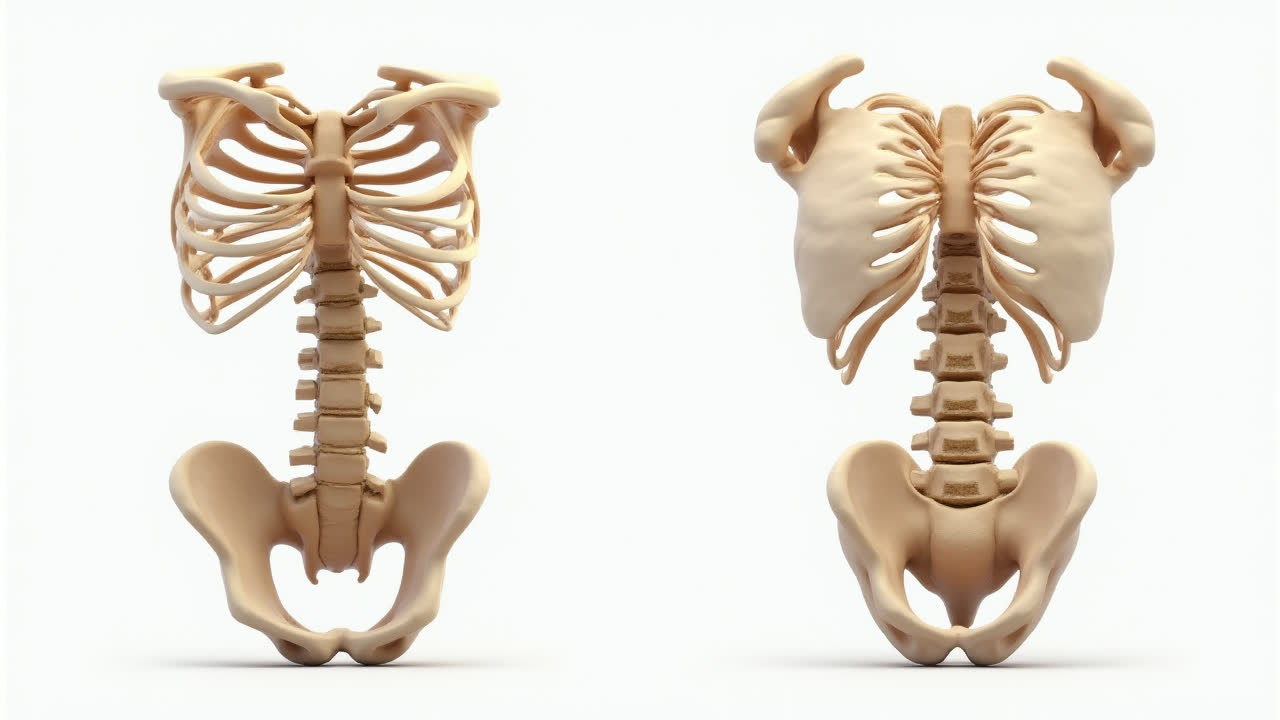
Understanding the differences between thoracic and lumbar vertebrae is crucial for anyone interested in spine health, anatomy, or dealing with back problems. These two vertebral groups form significant portions of our spine and have distinct characteristics that reflect their specialized functions. While they share some common features as vertebral bones, their unique structures enable them to serve different roles in supporting our body.
The human spine is an engineering marvel that provides structural support, allows for movement, and protects the spinal cord. It consists of 33 vertebrae divided into five regions: cervical, thoracic, lumbar, sacral, and coccygeal. Today, we'll focus on comparing the thoracic and lumbar sections, which make up much of what we commonly think of as our "back."
When you experience back pain, knowing whether it's in your thoracic or lumbar region can help identify potential causes and treatments. Each region faces different stresses and is prone to particular conditions. Let's dive deeper into what makes these vertebrae unique and how they contribute to our overall spinal function.
What Are Thoracic Vertebrae?
The thoracic spine consists of 12 vertebrae, labeled T1 through T12, that form the middle portion of your spinal column. These vertebrae are unique because they connect directly to your ribs, creating the protective cage around your vital organs. The T1 vertebra sits at the base of your neck, while T12 connects to the lumbar region at your mid-back.
Thoracic vertebrae are characterized by their heart-shaped bodies when viewed from above. They feature long, downward-pointing spinous processes (the parts you can feel protruding when you run your hand down someone's spine). One of their most distinctive features is the presence of facets – special articulation points where the vertebrae connect to ribs. These facets are unique to thoracic vertebrae and don't appear in other regions of the spine.
The primary function of thoracic vertebrae goes beyond just supporting your upper body. They serve as anchor points for the rib cage, protecting vital organs like your heart and lungs. This region of your spine is designed for stability rather than flexibility. Have you ever noticed how much easier it is to bend forward at your waist than to twist your mid-back? That's because thoracic vertebrae prioritize protection over mobility.
The spinal canal (the hollow space that houses your spinal cord) in the thoracic region is relatively large and circular. Another interesting feature is that thoracic vertebrae form a slight posterior curve called kyphosis, which is entirely normal. This natural curvature helps distribute weight evenly and absorb shock during movement. When this curve becomes excessive, however, it can lead to a condition called hyperkyphosis – commonly known as "hunchback."
What Are Lumbar Vertebrae?
The lumbar spine comprises five large vertebrae labeled L1 through L5, located in your lower back. These are the largest and strongest vertebrae in your entire spinal column, designed to bear most of your body weight. Their impressive size isn't just happenstance – it's a necessary adaptation to handle the tremendous forces placed on the lower back during everyday activities.
Lumbar vertebrae feature wide, kidney-shaped bodies when viewed from above, with short, blunt spinous processes that project almost horizontally rather than downward. Unlike thoracic vertebrae, they lack facets for rib attachment but have well-developed transverse processes that serve as attachment points for the powerful back muscles. The lumbar vertebrae also have uniquely oriented articular facets – the superior ones face medially (inward) while the inferior ones face laterally (outward).
Have you ever wondered why lower back pain is so common? It's partly because the lumbar spine bears an enormous responsibility. It supports the weight of your entire upper body while providing the flexibility needed for bending, twisting, and everyday movements. I've always found it fascinating how this region manages to balance these seemingly contradictory demands for both strength and mobility.
The lumbar region forms an anterior curve called lordosis, which is opposite to the thoracic curve. This curve helps center your weight over your pelvis and legs. When standing, you can observe this curve as the inward arch of your lower back. Between each lumbar vertebra sit thick intervertebral discs that act as shock absorbers. These discs are particularly massive in the lumbar region, reflecting the need for additional cushioning where weight-bearing demands are highest.
Thoracic vs Lumbar Vertebrae: Comprehensive Comparison
| Feature | Thoracic Vertebrae | Lumbar Vertebrae |
|---|---|---|
| Number | 12 (T1-T12) | 5 (L1-L5) |
| Vertebral Body Size | Comparatively large | Largest in the spine |
| Spinous Process | Long, thin, points downward | Short, thick, points horizontally |
| Transverse Processes | Fairly large | Large and blunt |
| Rib Attachments | Has facets for rib articulation | No rib attachments |
| Spinal Curvature | Kyphotic (curves posteriorly) | Lordotic (curves anteriorly) |
| Intervertebral Disc Size | Thin | Massive |
| Primary Function | Support rib cage and protect organs | Bear weight and maintain posture |
Key Structural Differences
The vertebral body is the main weight-bearing part of each vertebra, and its size reflects the load it must support. Thoracic vertebrae have heart-shaped bodies of moderate size, while lumbar vertebrae feature massive kidney-shaped bodies – the largest in the entire spine. This difference makes sense when you consider that lumbar vertebrae must support the cumulative weight of everything above them.
Let's talk about those bony projections that extend from vertebrae. The spinous process (the part you feel when touching someone's spine) differs dramatically between these regions. In thoracic vertebrae, this process is long, points downward, and overlaps with the vertebra below it. In contrast, lumbar spinous processes are short, thick, and project horizontally. Similarly, the transverse processes that extend sideways from the vertebrae serve different purposes. In thoracic vertebrae, they provide articulation points for ribs, while in lumbar vertebrae, they're attachment sites for powerful back muscles.
Another critical difference lies in the orientation of the articular facets – the joints where vertebrae connect. In thoracic vertebrae, the superior facets face posterolaterally (backward and outward), while the inferior ones face anteromedially (forward and inward). The lumbar region flips this arrangement, with superior facets facing medially (inward) and inferior facets facing laterally (outward). This difference in joint orientation significantly impacts the type of movement possible in each region.
The spinal canal, which houses and protects the spinal cord, also varies between these regions. Thoracic vertebrae feature a relatively large, circular canal, while the lumbar spinal canal is smaller and triangular in shape. By the time the spinal cord reaches the lumbar region, it has already begun branching into individual nerve roots, forming what's called the cauda equina or "horse's tail," named for its resemblance to a horse's tail hair.
Functional Differences and Clinical Significance
The distinct structural features of thoracic and lumbar vertebrae directly influence their functionality. The thoracic spine prioritizes stability and protection, with limited mobility compared to other spinal regions. Its primary role is supporting the rib cage and protecting vital organs like the heart and lungs. The thoracic spine allows for some rotation and lateral flexion (side-bending) but restricts forward and backward bending.
In contrast, the lumbar spine emphasizes mobility while maintaining the strength needed to support body weight. This region permits significant flexion and extension (bending forward and backward) but limits rotation. The lumbar spine's design reflects its dual role: bearing the weight of the upper body while enabling the movement necessary for daily activities like bending to tie shoelaces or reaching for objects on a high shelf.
From a clinical perspective, understanding these differences is crucial for diagnosing and treating spinal conditions. Thoracic pain is less common than lumbar pain but can indicate serious issues when it occurs. Conditions like scoliosis often affect the thoracic spine, while herniated discs and degenerative joint disease more commonly plague the lumbar region. I remember a patient who insisted their pain was in their "lower back" when it was actually mid-thoracic – this distinction completely changed the diagnostic approach!
The intervertebral discs also differ between regions, with lumbar discs being substantially thicker than thoracic ones. This makes sense given the greater shock-absorbing needs of the lower back. However, this also makes lumbar discs more susceptible to herniation and degenerative changes. The L4-L5 and L5-S1 junctions (where the lowest lumbar vertebrae meet each other and the sacrum) are particularly vulnerable points, accounting for the majority of disc herniations.
Similarities Between Thoracic and Lumbar Vertebrae
Despite their differences, thoracic and lumbar vertebrae share fundamental features as part of the vertebral column. Both types have the same basic components: a vertebral body in front, a vertebral arch behind, and various processes extending from the arch. The vertebral bodies of both types are separated by intervertebral discs that provide cushioning and facilitate movement.
Both thoracic and lumbar vertebrae contribute to protecting the spinal cord, which runs through the spinal canal formed by the succession of vertebral foramina. They both feature intervertebral foramina – openings through which spinal nerves exit to innervate specific areas of the body. Additionally, both types of vertebrae articulate with adjacent vertebrae through synovial joints formed by articular processes, allowing for controlled movement while maintaining stability.
The biomechanical principles governing both regions are similar, even if their specific adaptations differ. Both must balance the seemingly contradictory demands of stability and mobility. Both also play crucial roles in weight bearing and shock absorption during activities ranging from standing still to running and jumping. And unfortunately, both can be subject to similar pathological conditions like fractures, osteoarthritis, and tumors, though with different frequencies and presentations.
Frequently Asked Questions About Thoracic and Lumbar Vertebrae
Why is the lumbar spine more prone to injury than the thoracic spine?
The lumbar spine bears more weight than any other spinal region, supporting the entire upper body while also providing mobility for everyday movements. This combination of high load-bearing demands and movement requirements places tremendous stress on lumbar vertebrae and discs. Additionally, the lumbar spine forms a natural lordotic curve that can increase pressure on specific points. Many common activities like lifting heavy objects, bending incorrectly, or sitting for prolonged periods particularly stress the lumbar region. These factors, combined with the massive intervertebral discs that can degenerate or herniate, make the lumbar spine especially vulnerable to injury compared to the more stable, rib-supported thoracic spine.
Can you feel the difference between thoracic and lumbar vertebrae on your own back?
Yes, you can feel some differences between these regions on your own back. Run your fingers down your spine, and you'll notice the thoracic spinous processes (the bumps you can feel) are more prominent and angled downward, while lumbar spinous processes feel shorter and more horizontal. The transition from thoracic to lumbar occurs around the bottom of your ribcage. The thoracic region also feels less mobile when you try to bend backward, while the lumbar region allows for significant flexion and extension. Another noticeable difference is that the thoracic spine has ribs attached, which you can feel extending from the sides of the spine, while the lumbar region lacks these attachments but feels more substantial due to the larger vertebral bodies and surrounding muscles.
How do age-related changes differ between thoracic and lumbar vertebrae?
Age affects thoracic and lumbar vertebrae differently due to their distinct functions and stresses. Lumbar vertebrae generally show more dramatic degenerative changes with age because they bear more weight and experience greater mobility demands. Lumbar discs typically degenerate earlier and more severely, often leading to conditions like disc herniation, spinal stenosis, and facet joint arthritis. The thoracic spine, while more protected by the rib cage, commonly develops increased kyphosis (forward curvature) with age, particularly in those with osteoporosis. Thoracic vertebrae are more susceptible to compression fractures in older adults with bone density loss. Interestingly, the lumbar spine may actually lose some of its natural lordotic curve with age, while the thoracic kyphotic curve often increases, contributing to the characteristic stooped posture sometimes seen in elderly individuals.
Conclusion
Understanding the differences between thoracic and lumbar vertebrae provides valuable insights into spinal function and health. The thoracic vertebrae, with their rib attachments and emphasis on stability, play a crucial role in protecting vital organs and supporting the upper body. The lumbar vertebrae, with their massive size and emphasis on both strength and mobility, bear the weight of the upper body while enabling the movements necessary for daily life.
These anatomical distinctions aren't just academic – they have real implications for spinal health, injury patterns, and treatment approaches. When back pain strikes, knowing whether it's thoracic or lumbar can help guide both diagnosis and treatment. The structural and functional differences between these regions explain why certain conditions preferentially affect one area over another.
As we age, maintaining awareness of these spinal regions becomes increasingly important. Regular exercise that targets both thoracic and lumbar areas, proper posture, and spine-friendly habits can help preserve the health of these crucial vertebrae. Whether you're a healthcare professional, a fitness enthusiast, or someone dealing with back issues, appreciating the unique characteristics of thoracic and lumbar vertebrae provides a foundation for better spinal care and overall well-being.